
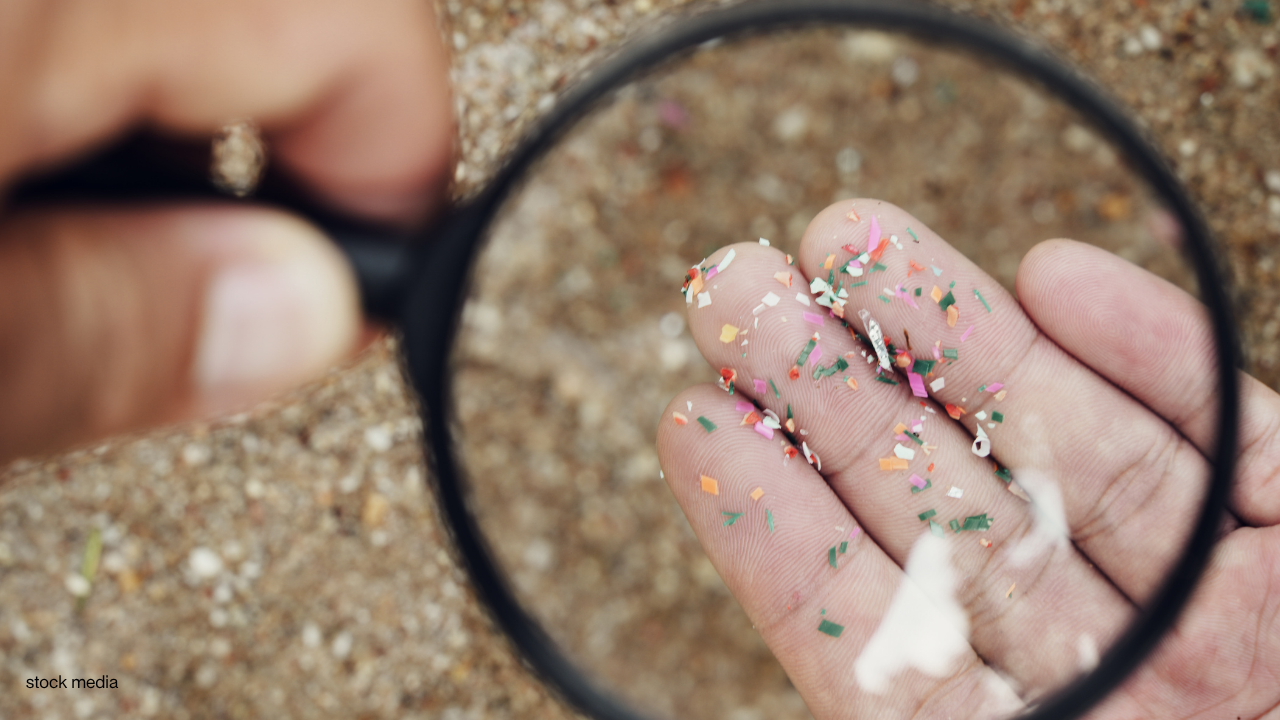
Your Food Packaging Is Releasing Microplastics. Here’s What to Do About It.
A new report, From Pack to Plate, commissioned by rePurpose Global and independently researched by Earth Action, changes how brands should think about packaging risk. For the first time, we have a systematic, format-by-format estimate of how much microplastic is entering food directly through packaging — not through environmental contamination, but at the point of contact, in your customer’s hands.
The headline number: roughly 130 mg of microplastics per person per year, globally, from packaging alone. That’s not a distant environmental problem. It’s built into your current packaging portfolio.
The good news — and this is what makes the report genuinely useful — is that the release is predictable. It’s driven by specific materials, specific formats, and specific use conditions. That means it’s designable.
What did the report actually find?
Earth Action analyzed seven of the most common food packaging formats, covering roughly 66% of global packaging volume. They looked at what happens under real conditions: sunlight, heat, repeated opening, transport, and long storage. Not lab ideals — actual use.
The formats that show up most often in high-exposure scenarios: PET bottles, rigid PET, and flexible PE. The biggest amplifiers of release: UV and sunlight exposure, friction at cap and closure interfaces, and heat — particularly relevant for anything marketed as microwave-safe or hot-fill compatible.
One of the report’s most useful contributions is the distinction between environmental importance and exposure importance. On a pure mass basis, packaging-related microplastic transfer into food is much smaller than emissions from sources like tyre wear or mismanaged waste. But on a human-exposure basis, the route is highly relevant because the particles move straight into food or drink at the point of use — no long environmental route, no dilution step.
You can download the full report here to dive into specific design recommendations.
Why the scientific community takes this seriously
The From Pack to Plate report went through independent scientific review, and its direction aligns with a growing body of regulatory and research consensus.
EFSA’s 2025 technical review confirms that microplastics are released during the use of food contact materials, with the strongest evidence pointing to mechanical stress, abrasion, and friction as the primary causes. A 2025 peer-reviewed evidence map in npj Science of Food reached the same conclusion: normal and intended use of plastic food contact articles leads to migration of micro- and nanoplastics into food.
WHO and a 2026 review in Nature Health both flag oral exposure to micro- and nanoplastics as a public health and food safety concern — while being careful to note that significant research gaps remain around specific health outcomes. The Earth Action report takes the same measured position: this is not a health risk assessment. It estimates exposure and identifies where brands can act.
What should brands do next?
Three immediate questions worth answering about your packaging portfolio:
- Which SKUs have the highest volume and direct food contact?
- Are any of those exposed to sunlight during storage, transit, or retail display?
- Are you testing heat-compatible or resealable formats under realistic use conditions — or just functional pass/fail?
This isn’t a call to replace all plastic. It’s a call to know which packaging systems in your portfolio carry the most exposure risk, and to have a plan for the highest-priority ones. The brands that will be ahead of this are the ones building that picture now, not waiting for regulation to force the question.
Your packaging data is the starting point. If it’s sitting in disconnected spreadsheets across suppliers and SKUs, that’s the first thing to fix.
Next, brands should identify the packaging formats where exposure is most plausibly concentrated. In Earth Action’s synthesis, that means looking closely at PET bottles, rigid PET, flexible PE, and, in some use cases, rigid PP.
Brands should stop evaluating packaging only at the level of polymer name. The report repeatedly shows that format, geometry, closures, heat, abrasion, irradiation, and storage conditions can outweigh broad statements like “PET is good” or “PP is bad.”
In addition, brands should update test protocols so they resemble actual use. EFSA’s review says the evidence base still suffers from weak methods, but that same critique points toward what better corporate practice looks like: realistic handling conditions, validated controls, better particle identification, and more attention to real foods rather than water alone. (EFSA, 2025)
LastlyFourth, packaging teams should coordinate with food-safety, procurement, regulatory, and sustainability teams. This is not only a materials question. It sits at the intersection of product design, storage, transport, compliance, and risk communication.
What is the clearest takeaway?
The most important message from the Pack to Plate report is not that every plastic package is equally problematic. It is that food packaging is an overlooked but actionable source of human exposure.
It allows us to turn the conversation from vague concern to real methods for operational prioritization: which formats are highest leverage, which conditions amplify release, which product claims need retesting, and which redesigns are worth doing first.
Frequently asked questions
What are micro- and nanoplastics in food packaging?
They are very small plastic particles that can be released from packaging and other food contact articles during use. In the Earth Action report, the term covers a size continuum from microplastics down to nanoplastics because packaging-related release can happen through abrasion, aging, heat, and related mechanisms rather than through a single pathway.
Does the new report prove that plastic packaging is unsafe?
No. The report does not claim to establish disease risk or declare specific packaging formats unsafe. It estimates exposure and identifies prevention levers. The report is strongest on comparative exposure and packaging mechanics, and does not make any specific health related claims, instead highlighting the need for more investment into better research.
How much microplastic might a person ingest from packaging each year?
Earth Action’s extrapolated central estimate is about 130 mg per person per year, with a broad uncertainty range and substantial variation by consumption pattern. The report also notes that the particle count could reach hundreds of millions to billions per person per year depending on size assumptions. These are screening-level estimates, not individual biomonitoring results.
Which packaging formats matter most?
In the report’s overall synthesis, estimated exposure is concentrated in a small number of formats, especially PET bottles, rigid PET, and flexible PE. That said, Earth Action also warns that study coverage is uneven, so better-studied formats may appear more dominant partly because the evidence base is thicker. (Earth Action, 2026)
Why does particle size matter so much?
Because mass and biological relevance are not the same thing. Smaller particles contribute less mass, but they may be more relevant to uptake, tissue interaction, and cellular exposure. Earth Action therefore argues that particle count and size distribution should be read alongside mass-based estimates.
Are chemicals part of this story too?
Yes. WHO, the European Commission, and the food-contact-chemicals literature all point to the importance of additives, monomers, and other migrating substances. Earth Action adds that packaging-related particle exposure may happen alongside exposure to intentionally added substances and non-intentionally added substances, or NIAS. (WHO, 2022; European Commission, 2026; Earth Action, 2026)
What should a brand change first?
Start with packaging that combines high market volume and high-stress use conditions: bottles and containers exposed to sunlight, hot-fill or microwavable formats, and designs with high-friction caps or closures. Then upgrade specifications, use-condition testing, and storage controls. (Earth Action, 2026; EFSA, 2025)
Sources cited
• Earth Action. (2026). From Pack to Plate: A Global Assessment of Micro- and Nanoplastics Migrating from Food Packaging into Food. https://www.e-a.earth
• European Food Safety Authority (EFSA). (2025). Literature review on micro- and nanoplastic release from food contact materials during their use. EFSA Supporting Publication 2025:EN-9733. https://doi.org/10.2903/sp.efsa.2025.EN-9733
• Zimmermann, L., Geueke, B., Parkinson, L. V., Schür, C., Wagner, M., & Muncke, J. (2025). Food contact articles as source of micro- and nanoplastics: a systematic evidence map. npj Science of Food, 9, 111. https://doi.org/10.1038/s41538-025-00470-3
• World Health Organization. (2022). Dietary and inhalation exposure to nano- and microplastic particles and potential implications for human health. https://www.who.int/publications/i/item/9789240054608
• Di Fiore, C., & Avino, P. (2026). Microplastics and nanoplastics in the human diet. Nature Health, 1, 48-57. https://doi.org/10.1038/s44360-025-00025-6
.png)

.avif)
.jpg)
.png)