
.avif)
What Is EPR?
EPR stands for Extended Producer Responsibility. It's a set of laws now active across multiple U.S. states — including California, Colorado, Oregon, Maine, Minnesota, New Jersey, and Maryland — that hold brands legally accountable for the packaging they put into the marketplace.
In plain terms: companies that sell products in the U.S. are now required by law to report exactly what materials their packaging is made of, and to pay fees based on how much packaging waste they generate. Those fees fund recycling infrastructure across the country.
This is not optional. Seven states have already passed EPR legislation, and more are coming. As of May 31, 2026, six states' annual reports are due simultaneously. The brands you work with face real financial consequences — including fines of up to $50,000 per day — for inaccurate or incomplete reporting.
Why Do They Need Data From You?
Brands are responsible for reporting the packaging of every product they sell. But in most cases, they don't manufacture that packaging themselves — you do. That means the data lives with you: the material specs, the weights, the resin types, the adhesive compositions.
Without your data, your customers cannot file an accurate compliance report. And without an accurate report, they risk overpaying fees or facing regulatory penalties.
This is a legal compliance requirement — not an internal audit or a sustainability questionnaire. The more complete and accurate the information you provide, the better outcome for everyone in the supply chain.
What Data Are They Asking For?
The specific fields vary by customer and packaging type, but in general, here is what EPR reporting requires for each packaging component you supply:
For every packaging component (primary, secondary, and shipping packaging):
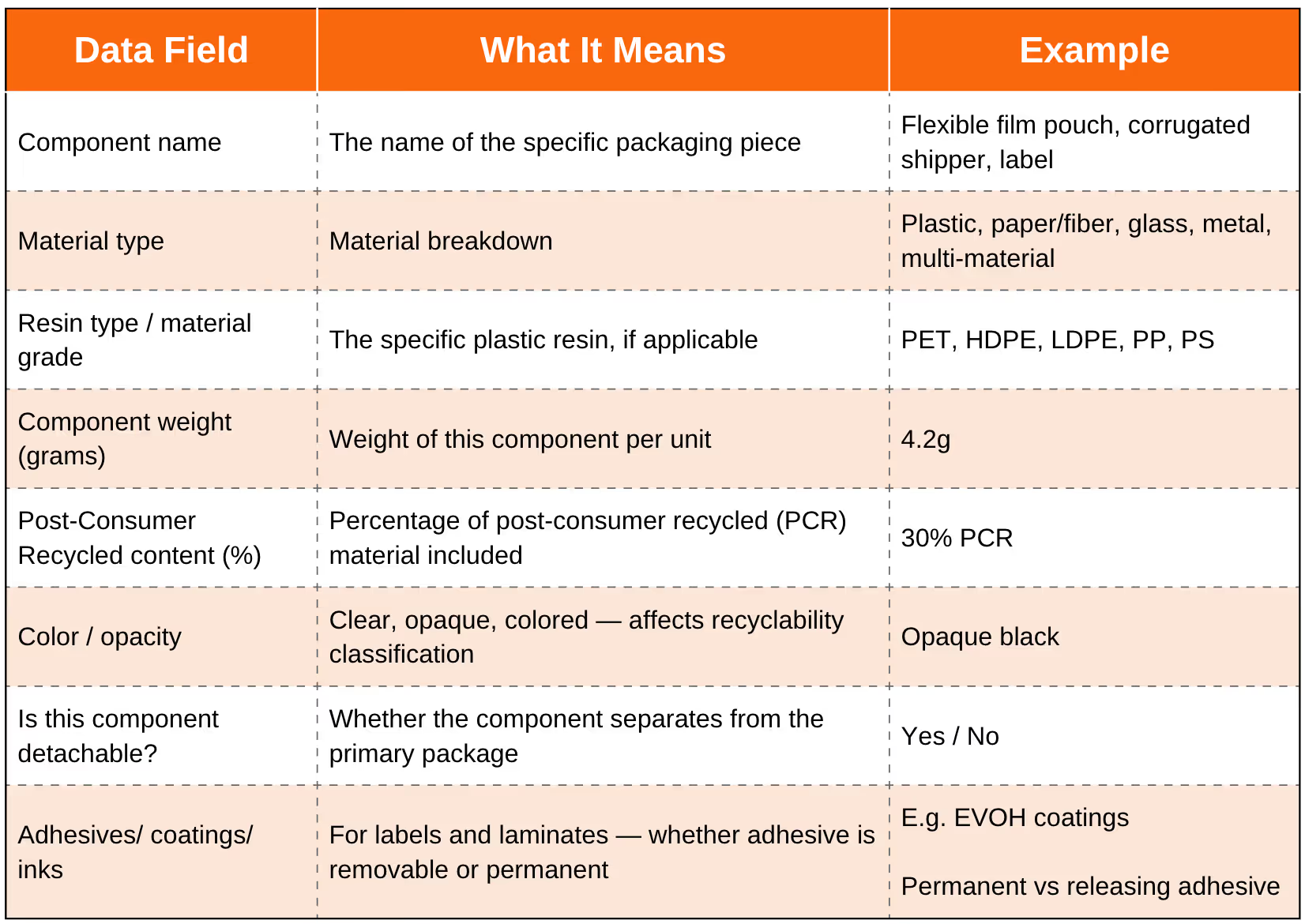
For multi-layer materials (films, laminates, pouches):
- Individual layer weights or percentage breakdown
- Material of each layer in order (e.g., PET / tie layer / PE)
- Total structure weight
Common Questions From Suppliers
"We track this data internally, but not in the format they're asking for." That's okay — and it's the most common situation. If you have product spec sheets, technical data sheets, or bills of materials (BOMs), share those. Your customer or their compliance team can often translate that into the format they need. The more raw technical detail you can provide, the better.
"Some of this information is proprietary." We understand that detailed formulations can be commercially sensitive. In most cases, brands don't need proprietary formulations — they need material categories, weights, and resin codes. If you have concerns, reach out to your contact at the brand to discuss what level of specificity is workable. Most EPR reports require material-level data, not trade-secret-level detail. Suppliers can also request the material categories and definitions for different EPR reports so they can suggest the most apt category for the material being supplied.
"We supply to many brands — can't we use a standard format?" Yes, and this is exactly what we'd encourage. If you establish a standard packaging data sheet that covers the fields above, you can share a version of it with any customer who requests EPR data. This saves significant back-and-forth for everyone.
"Our inputs vary batch to batch — especially recycled content." The most defensible approach is to follow a standardized methodology for how PCR content is apportioned — either through documented batch records or a third-party certified standard. Reference whichever methodology or certification you follow and include that documentation in your response. If the brand is directly procuring the recycled feedstock, they will already know the proportions and can confirm them independently. Otherwise, as the supplier or packaging converter, you should be able to confirm the PCR allocation methodology used. If a brand is audited, supplier documentation that ties PCR claims to a verifiable standard is what makes those claims defensible.
What Happens If You Don't Respond?
Your customers are under regulatory deadlines. When a supplier doesn't respond, it creates a bottleneck that can delay their entire compliance filing — across multiple states simultaneously. Some brands have reported that a single non-responsive supplier held up reporting for 95% of their product line.
Beyond the relationship impact, this creates real financial exposure for your customer. We'd encourage you to treat these requests with the same urgency as a purchase order or a safety data sheet request.
How to Respond
Your customer may have sent you a pre-filled template to verify and return. If so, please:
- Review each pre-filled field for accuracy
- Correct or update any fields that are wrong or outdated
- Fill in any blank fields where you have the data
- Return the completed document to your contact within the requested timeframe
- Note any fields where you genuinely cannot provide data, and briefly explain why
If you did not receive a template and are starting from scratch, you can use the data fields listed above as a guide, or reach out to your customer contact to request their preferred format.
Questions?
If your customer is working with rePurpose Global on their EPR compliance, their compliance team can answer questions about what data is needed and why. You can also learn more about EPR regulations here.
Thank you for your partnership in making compliance work for the entire supply chain.
This brief was prepared by rePurpose Global. rePurpose is a packaging sustainability and compliance platform helping 100+ brands navigate EPR reporting across the U.S. and internationally.
Related posts


.avif)