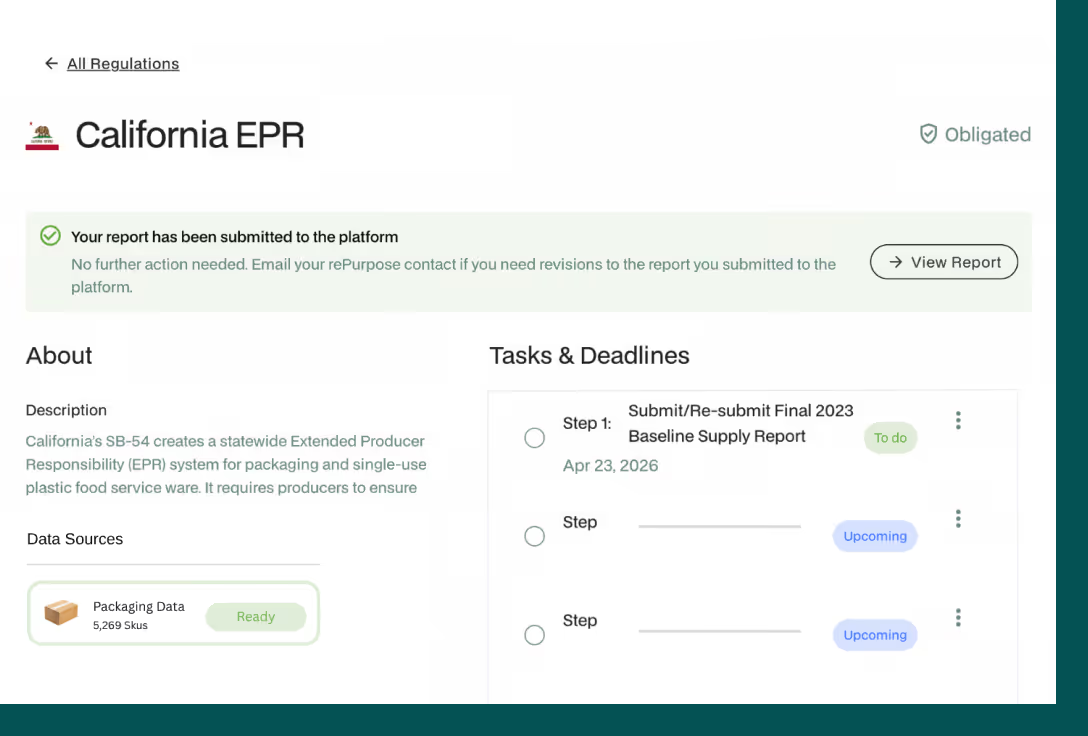
California EPR Compliance: Your Step-by-Step Guide

Written by our compliance experts, this guide gives you everything you need for California EPR compliance.
What's Inside:

Trusted by 100+ Consumer Companies












California EPR Timeline

Why California EPR Is Different
Download the eBook for Free
Frequently asked questions
Everything you need to know about streamlining packaging compliance.
Extended Producer Responsibility (EPR) is a new type of law in the US that makes brands responsible for the packaging they put into the world. Under EPR, companies must collect, format, and submit packaging data to each relevant state, then pay fees based on the types and amounts of packaging they use.
First adopted in Europe and Canada, EPR was designed to shift the financial burden of waste management from the public sector to producers. All fees will go towards funding state-run recycling programs to improve waste collection infrastructure.
You likely need to comply with EPR if you meet these criteria:
- Above $5 million in global annual revenue or above $1M in annual revenue in California
- Commission single-use packaging, paper products, or food serviceware that feature your brand
- Are a brand owner, importer, licensee, distributor, or retailer with private label products selling into EPR states (such as California, Colorado, or Oregon)
To confirm your eligibility, take our survey and talk to our team.
As of mid-2025, seven states (Maine, Oregon, California, Colorado, Minnesota, Maryland, Washington) have passed EPR laws, with Oregon leading the way.
Colorado's reporting deadline is July 31, 2025, and California follows with reporting due November 15, 2025. Additionally, several states—including Connecticut, Illinois, and New York—have active EPR initiatives in progress and are expected to enact similar legislation in the coming years.
Non-compliance can result in serious consequences including:You likely need to comply with EPR if you meet these criteria:
- Fines up to $25,000 per day in some states.
- Sales bans and prohibition from selling products in regulated markets.
- Public listing as non-compliant.
- Reputational damage and business disruptions
EPR fees vary by material type and state. In Oregon, the average fee for our customers was $615 per metric ton across industries, with pet products averaging $801 per metric ton and health & wellness products averaging $249 per metric ton. Fees depend on packaging recyclability and volume.
Without expert help, EPR compliance typically takes 2+ months of work. With professional assistance like rePurpose's platform, the process can be reduced to approximately 2 weeks for your first state, with subsequent states taking much less time using the same data architecture.
Yes, EPR fees can often be significantly reduced through proper optimization strategies:
- Smart Data Collection: Knowing exactly which data to collect (and which to skip) prevents over-reporting and reduces unnecessary fees. Expert platforms help you avoid "boiling the ocean" hunting for irrelevant information.
- Reporting Option Selection: Many states offer different reporting options for low-volume producers. Expert analysis can identify the most cost-effective choice. For example, rePurpose saved low-volume clients an average of $3,750 in fees by selecting optimal reporting pathways—one brand paid only $360 instead of $4,400.
- Accurate Material Categorization: With 140+ material categories across different states, proper classification is crucial. Misclassification can lead to overpayment, while expert categorization ensures you pay only what's required.Public listing as non-compliant.
- Exemption Identification: Many products qualify for exemptions that brands miss without expert guidance. Identifying exempt products and covered materials can significantly reduce your fee burden.Reputational damage and business disruptions
- Multi-State Efficiency: Using the right data architecture from the start saves money across all EPR states. Your initial investment pays dividends as you expand compliance to additional states.
EPR reporting requires detailed packaging data, which can be complex to compile and varies by state. Brands must be prepared to report on:
- Types and amounts of packaging materials used (including component-level details like material type and color)
- Product exemptions and covered materials
- Packaging weights and recyclability information
- Packaging format and component-level detail
- Material categories (there are 140+ categories across different states)
- Sales data by state
To meet these requirements, you'll need data from both internal and supplier sources.
Yes, if you sell packaged products in multiple states with EPR laws, you'll need to comply with each state's requirements. However, the data architecture is similar across states, so initial compliance work can be leveraged for future state requirements with minimal additional effort.
You have three main options for EPR compliance, each with distinct advantages and drawbacks:
DIY Approach:
- Pros: Lower upfront cost, full control over process
- Cons: Requires 2+ months of internal work, high risk of errors, no ongoing support, difficult to optimize fees, requires deep regulatory expertise
Consultants:
- Pros: Expert guidance, customized service
- Cons: Expensive ($40,000-$120,000+), project-based with no ongoing platform, limited scalability across multiple states, still requires significant internal coordination
Software Platforms (like rePurpose):
- Pros: Reduces process to ~2 weeks, automated multi-state compliance, ongoing support, fee optimization, scalable across all EPR states, comprehensive data management
- Cons: Not all software platforms created equal
Most brands find software platforms offer the best balance of cost, efficiency, and ongoing value, especially for companies planning to operate in multiple EPR states.