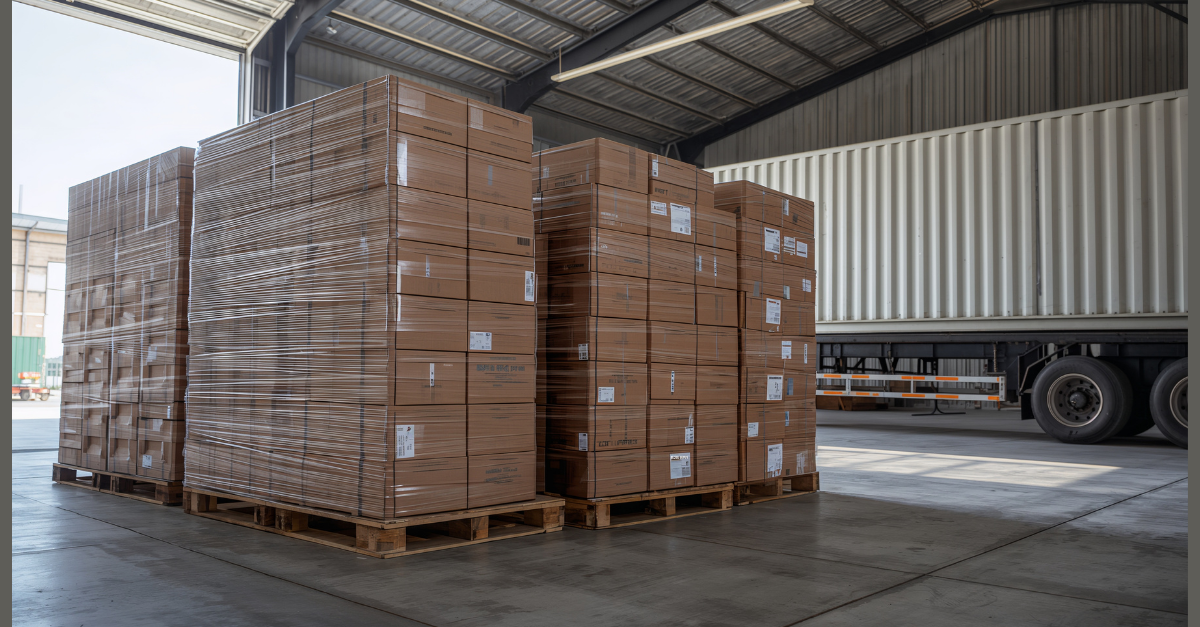
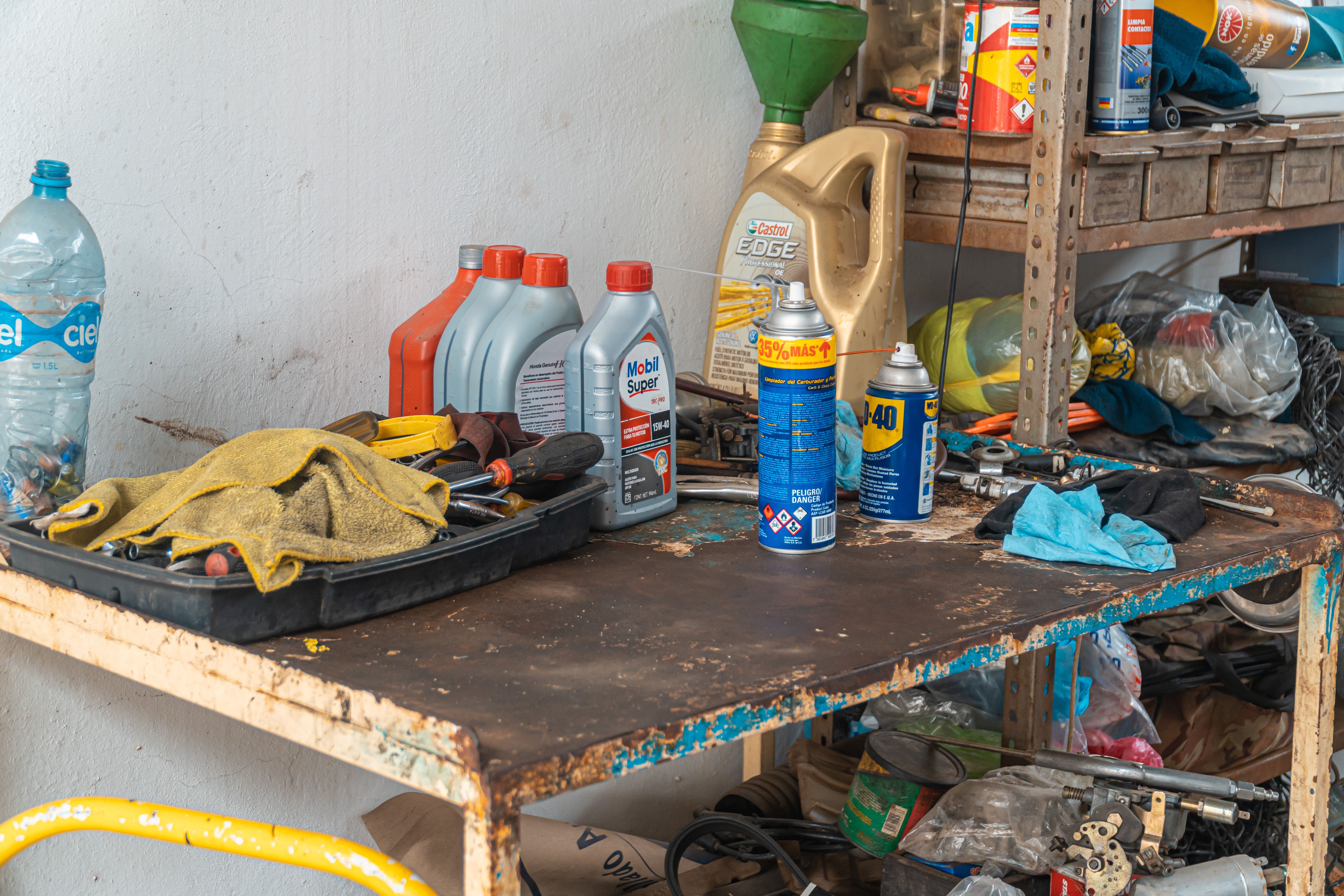
When it comes to packaging law, it’s easy to picture shampoo bottles, milk cartons, and other consumer goods, not brake fluid and transmission parts. But those get packaged, too. That common gap in perception is why many automotive companies are caught off guard by Extended Producer Responsibility (EPR) obligations.
The reality is that packaging EPR applies across every industry and every tier of the supply chain. Automotive isn't exempt, and shipping your parts to an OEM doesn't automatically transfer your reporting obligation to them. If you're an automotive company, the real question isn't whether EPR applies to you — it's where, how, and what it requires of you specifically.
For automotive companies, packaging EPR obligations can fall across two distinct compliance pathways:
- General packaging & paper EPR: the state programs that apply broadly across packaging types and industries, typically administered by a designated producer responsibility organization (PRO), such as Circular Action Alliance (CAA).
- Specialized automotive and lubricant packaging EPR: state-specific pathways designed for qualifying petroleum, lubricant, and automotive fluid packaging, operated by the Lubricants Packaging Management Association (LPMA) under the Interchange 360 name.
For simplicity, we'll refer to these throughout this article as “general EPR” and “LPMA.”
Each program has its own covered materials and its own registration and reporting requirements. That distinction matters because it’s common for a single producer’s packaging portfolio to touch both. Depending on the covered materials a producer sells into a given state (e.g., auto parts and petroleum), that producer may need to register and report with both general EPR and LPMA, not as duplicate filings, but as separate obligations covering different parts of the same packaging mix.
In both general EPR and LPMA, who actually counts as the "producer"?
In both programs, obligation generally follows brand control and first supply into the state. You may be the obligated producer if you're a:
- Brand or trademark owner who controls the branding of covered materials
- Licensee directing production under a licensed brand
- Manufacturer where no identifiable brand exists
- Importer — the first entity bringing goods into the U.S.
- Retailer selling private-label product
- Distributor — the first to distribute into the state
Packaging obligations show up across the entire automotive value chain, from aftermarket retail cartons and blister packs, to Tier 1/2 service-part packaging, OEM manuals and accessory packaging, private-label retail packaging, and Tier 3 industrial bulk sacks and drums.
Understanding EPR: The Explainer
What is EPR, really?
Extended Producer Responsibility (EPR) is a regulatory framework that shifts the cost and burden of managing packaging waste from local governments to the producers who put that packaging on the market. In practice, it makes brands accountable for the full lifecycle of their packaging, from product design through collection, recycling, and safe disposal.
By putting the cost of waste management back on producers, EPR incentivizes better upstream choices: designing packaging that's actually recyclable or compostable, funding recycling infrastructure, and switching to lower-impact materials.
Who manages it?
A Producer Responsibility Organization (PRO) is the entity that helps producers actually comply with EPR law by managing collection, recycling, and disposal on their behalf. This matters most for small and mid-sized companies that don't have the internal resources to navigate a patchwork of state regulations alone.
The Circular Action Alliance (CAA) is the PRO administering most active state programs. CAA handles registration, reporting tools, and education so producers can stay focused on their business instead of becoming regulatory experts overnight.
The current state of EPR law in the U.S.
There are 7 active packaging EPR laws in the U.S. today, with more expected at the state level. California, Colorado, Oregon, Washington, Minnesota, and Maryland shared a harmonized May 31, 2026 reporting deadline, driven by CAA. While Maine has an active law, their program status and timeline is yet to be determined. If you miss a deadline, you still have to report to CAA as soon as possible. Noncompliance comes with penalties.
For a deeper dive into 2026 EPR, read our blog post: 2026 EPR Deadlines: Complete Guide to Fees & Reports.
What drives your EPR fees
Every state uses roughly the same fee logic, built on three inputs:
- The materials in your packaging: Each SKU has to be broken down into components (bottle, cap, label, wrapper), sub-components (adhesives, layers, closures, especially scrutinized in California), and material types (PET, PP, LDPE, aluminum, paper, glass, multilayer). Each material carries its own per-kilogram fee.
- State-specific sales volume: Fees are calculated per state, so you need accurate (or compliantly estimated) unit sales by SKU, by state.
- Fee schedules: Each state sets its own $/kg rates by material category, and these vary significantly from state to state. Expect this to get more complex: eco-modulation criteria will expand between 2026 and 2028, and total compliance costs are expected to climb as more states launch programs and recycled-content mandates tighten.
Each state has its own EPR goals. California, notably, has the most aggressive targets of any state: 100% of single-use packaging recyclable or compostable, 10% shifted to reuse/refill/elimination, 25% source reduction for plastic (vs. 2023 baseline), and a 65% recycling rate for single-use plastic and food serviceware.
Noncompliance comes at a high cost
Skipping EPR reporting doesn't just risk a fine. The consequences compound:
- Financial: States can levy accruing daily fines (California up to $50,000/day, Oregon up to $25,000/day), on top of retroactive fees for any reporting you've missed. Back pay doesn't go away.
- Market and sales restrictions: States can block non-compliant companies from distributing, importing, or selling covered products. Major retailers enforce this too. Costco, for example, requires suppliers to report.
- Reputational: PROs can and do publish public lists of delinquent producers (Oregon has already released one), which puts consumer trust, brand loyalty, and investor confidence on the line.
Most automotive producers are obligated to general EPR reporting. But if your portfolio includes lubricant or petroleum packaging, you're not done yet. That's where LPMA comes in.
LPMA and Interchange 360: The Explainer
What is LPMA?
LPMA (Lubricants Packaging Management Association) is a PRO that is purpose-built for petroleum and automotive fluid packaging. It exists to help the automotive and petroleum sector meet state EPR laws through a pathway suited to their specific products.
LPMA programs are operated through Interchange 360, run by the U.S. affiliate of Canada-based Interchange Recycling. LPMA is the association; Interchange 360 is the operating program. In practice, people use the names interchangeably. Producer registration and reporting happen on Interchange 360's platform, through a portal called The Vault.
Why does a separate program exist at all?
Because a bottle of motor oil isn't a bottle of shampoo. Containers that held oil, antifreeze, or additives require specialized recovery systems — they're not suited to conventional curbside single-stream recycling. Interchange 360 collects this material through commercial vendors and dedicated drop-off sites, then routes it to lubricant-specific recyclers. Running a separate stream also lets the industry control program cost and aim recovered material back into new motor oil packaging, rather than letting it dilute into a mixed recycling bale.
Where LPMA currently applies
As of August 2026, state-by-state status varies widely:
- Colorado: Live. Individual plan approved September 2025; collection operating since March 2026.
- Washington: Selected for an alternative program; reporting and fees haven't started.
- California: Registration and planning active; independent operation not yet approved.
- Maine: Pursuing approval as an alternative collection program.
- Maryland: A complementary pathway is still developing.
- Oregon / Minnesota: No clear independent pathway under current rules.
- Vermont: Interchange activity exists, but outside the packaging-EPR model.
What products actually fall under LPMA?
LPMA covers all petroleum, petroleum-related, and automotive-related fluid products, in any packaging material, in containers up to and including 15 gallons.
Product types include Motor Oils, Aerosols, Coolants, Diesel Exhaust Fluid, and others.
Specifically, this could look like:
- Engine and crankcase oil, two-cycle engine oil, gear oil, transmission fluid
- Brake fluid, hydraulic fluid, grease
- Antifreeze and coolant, compressor and turbine oil
- Oil additives and treatments, fuel system cleaners, penetrating oil
- Parts degreaser, windshield-washer fluid, winter start fluid
Formats include rigid bottles, pails, tubes, cartridges, bag-in-box, and aerosols, across metal, HDPE, PP, PE, cardboard, and paper. Notably excluded: automotive appearance products like car wax, glass cleaner, and upholstery shampoo; those stay under general EPR.
And LPMA's packaging scope goes beyond the bottle itself. It covers primary packaging (bottle, cap, closure, nozzle, seal, label), secondary packaging (retail cartons, multipack trays, shrink wrap), and tertiary/transport packaging (pallets, stretch wrap, strapping).
What data do you need to report?
For each product type, the following data needs to be reported:
- Container size for each product type
- Number of units sold for each product type
- Material type for each product
- Percentage of PCR used in each product
How LPMA reporting and fees actually work
Reporting runs on a regular cycle: maintain SKU and sales data through the year and submit your report in Interchange 360’s portal, The Vault. Frequency, whether monthly, quarterly, or annual, depends on your state and signed participation agreement. By default, all new participants are initially set up as quarterly. Even if you sold zero covered products in a period, you still file a nil report.
In Colorado, LPMA charges a flat rate per gallon of product sold. Planning fees stop once implementation fees begin:
- Planning fee, which funds plan development and administration:
$0.14/gallon across all products, formats, and sizes
- Implementation fee, which funds actual collection and recycling infrastructure
$0.56/gallon for containers up to 15 gallons
Rates are subject to change as states finalize program requirements, including eco-modulation requirements around PCR content and recyclability. In Colorado, there is additional uncertainty: the Independent Lubricant Manufacturers Association (ILMA) is challenging the state’s approval of both the LPMA and CAA program plans, including LPMA’s per-gallon fee structure.
What You Need to Do Now
All of this points to a more specific question: which of your packaging falls under general EPR, which falls under LPMA, and are you the responsible producer for each?
If you're an automotive producer who hasn’t registered or reported:
- Assess whether you're a covered producer in each state you sell into
- Register with CAA (currently the PRO for all active EPR programs)
- Submit a supply report covering the types and weights of covered materials sold
- Budget for fees, pay your invoice, get ahead of state-specific targets like California's source reduction requirements
- Prepare for 2027 reporting deadlines
If you produce automotive lubricants or petroleum products:
- Take the above steps to register for EPR
- Register for LPMA. Sign a participation agreement per state, create a Vault account, select your state programs
- Report net sales for covered products, including product category (e.g., motor oil, coolant, DEF), container size, packaging material, and PCR content
- Remit fees and dues, invoiced based on units and gallons at the program rate
- Verify PCR claims, document exemptions, and retain compliance records (five years in Colorado)
Even though the May 31 deadline has passed for EPR states, the obligation to report doesn't disappear. The CAA portal remains open, and catching up now costs less than compounding daily fines later.
How rePurpose Can Help
rePurpose helps automotive suppliers manage EPR and LPMA compliance in one place: mapping your distinct obligations, reconciling fragmented packaging data, forecasting fees, and completing multi-state reporting.
Want help figuring out where your packaging portfolio falls? Get in touch with our team.
Related posts


.avif)