

What Producers Need to Know Right Now
California’s SB 54 is more comprehensive than other state EPR frameworks, requiring not only standard reporting but also mandates for source reduction.
Source reduction reporting begins with the May 31, 2026 deadline. Obligated producers submit the following reports:
- 2023 Baseline Data Report
- Annual Supply Report (using 2025 CY data)
- Annual Source Reduction Report (using 2025 CY data)
Beyond that, producers are required to submit their Individual Source Reduction (ISR) Plan by August 1st, 2026.
If you’re just getting started on EPR reporting, we recommend doing so without further delay. Oregon has sent out delinquency notices, and other states may follow suit. Noncomplying producers in California could face up to $50,000 in penalties per day. The deadline may pass, but the obligation doesn’t.
This guide breaks down what source reduction means in California, what's required of your company, what you need to do right now, and how rePurpose can help leading up to August 1.
What Is Source Reduction Under California's EPR Law?
Source reduction is the requirement to reduce plastic at the source, before it ever becomes waste. Under California's EPR law (SB 54), producers are required not just to fund recycling infrastructure (via EPR fees), but to actively reduce the amount of plastic packaging they put into the market in the first place by 25% by 2032 collectively as a producer community.
This is a fundamentally different ask from traditional EPR. It requires producers to change their packaging, not just pay into a system. And critically, it introduces binding targets, formal plans, and annual reporting obligations that apply to every covered producer.
The first milestone: a 10% plastic reduction by January 2027, measured against your 2023 packaging baseline.
California’s Targets At A Glance
.avif)
How Is Source Reduction Measured in California?
What Are the Approved Source Reduction Pathways?
Every source reduction action must be attributed to one of five approved pathways. Here's what each one means in practice:
Can Post-Consumer Recycled (PCR) Content Count Toward Source Reduction?
Yes, PCR is listed as an alternative compliance pathway, meaning it can help you meet source reduction targets. But there are important conditions:
- Third-party certification required: PCR must be certified through the Association of Plastic Recyclers (APR) PCR Certification Program.
- Only incremental PCR counts: If you were already using PCR in 2023, that's baked into your baseline. Only additional PCR above your 2023 level earns credit.
- PCR is considered a near-term "low-hanging fruit" by CAA, and producers are actively encouraged to incorporate it to meet early milestones.
What Is My Source Reduction Target?
Source reduction targets are based on 2023 data – not relative source reduction, but actual source reduction. This makes early action especially important for growing brands. California uses two metrics to track source reduction progress. Both must be met simultaneously. You cannot reduce plastic weight while increasing component count and still be compliant.
The Two Core Metrics
- Plastic Material Weight: The total weight of plastic in your packaging, measured against your 2023 baseline.
- Number of Components: The count of individual plastic packaging components, also measured versus 2023 levels.
Net Source Reduction is a Key Compliance Metric
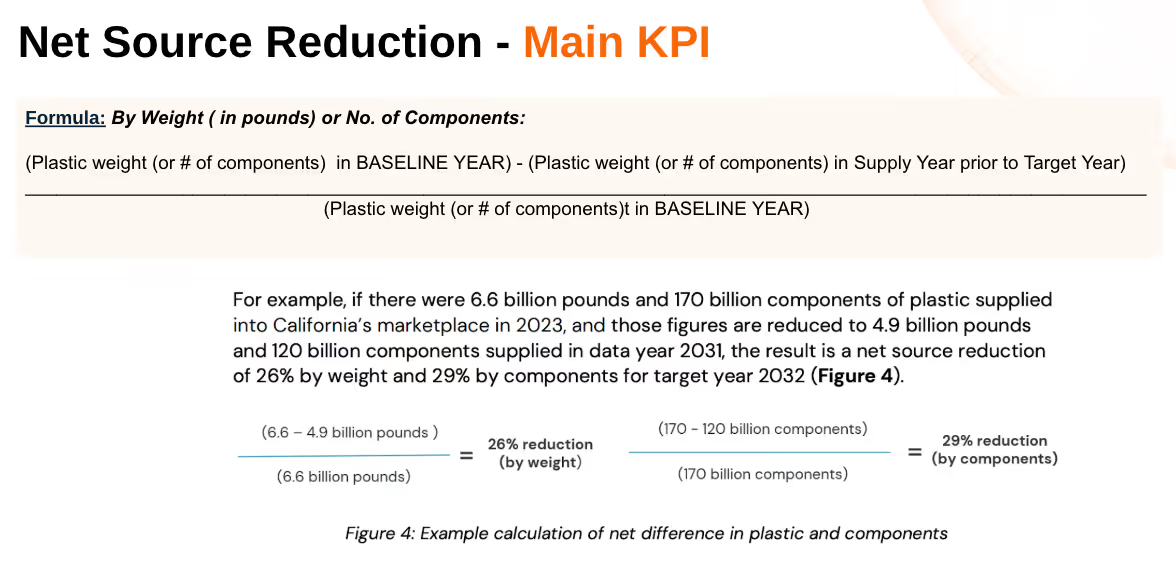
1. Net Source Reduction (The Actual Reduction - compared to 2023 Baseline)
What it is:
The actual reduction in total plastic supplied into California compared to 2023 — with no adjustments for sales growth.
What it’s for:
This is the state’s primary measurement of progress. It shows whether less plastic is entering the California market than in 2023.
2. Source Reduction Activity (The Effort)
What it is:
All actions a producer takes to reduce plastic — such as redesign, elimination, reuse conversion, or material changes. This is a CAA metric to track the reductions, even if sales growth nullifies the actual target.
What it’s for:
This is a reporting metric. It documents the producer’s efforts and is included in:
- The Initial Source Reduction (ISR) Plan
- The Annual Source Reduction Report
This is the activity tracking, not the compliance outcome.
What Are Producers Required to Submit — and When?
There are three distinct deliverables producers are responsible for, each with different deadlines. It's important to understand how they differ from one another.
What Is an Individual Source Reduction (ISR) Plan?
Every producer must develop a formal, written plan detailing how they will achieve their source reduction targets. The plan must include enforceable agreements with the CAA, meaning producers are legally committing to how they'll hit their targets.
The ISR Plan is a one-time submission that looks ahead, laying out your future strategy and commitments, with room to credit pre-2023 actions if you have solid evidence.
ISR Plan: Key Facts
- Deadline: August 1, 2026
- ISR Plan Portal Opens: June 1, 2026
- Reviewed individually: CAA will review each producer's plan separately
- Binding agreements: Plans become enforceable commitments with CAA
- Historical reductions (2013–2022): You can claim credit for actions taken before the baseline year, but these must be backed by solid data and evidence. Without documentation, they count as zero.
What Is the Annual Source Reduction Report?
Separate from the ISR Plan, producers must submit an Annual Source Reduction Report every year. This is essentially a progress report tracking actual source reduction activity across each pathway (lightweighting, bulking, right-sizing, etc.) against the forecasts mentioned in the source reduction plan.
In contrast to the ISR Plan, the Annual Source Reduction Report looks back, tracking real year-over-year progress.
Annual Source Reduction Report: Key Facts
- First due date: May 31, 2026 (covering 2025 data)
- Ongoing: Required every year thereafter
- Unusual timing this year: The first annual report deadline comes before the ISR Plan itself this year.
- Covers: 2025 supply data and source reduction pathway activity and continues annually
What is the 2023 Baseline Report, and Why Does It Matter So Much?
Everything in California EPR source reduction is measured against your 2023 packaging baseline. Getting this right and getting it submitted correctly is arguably the single most important task you have right now. It comes first in the source reduction reporting sequence.
The Baseline Window is Final
Once you submit your 2023 packaging baseline numbers by May 31, 2026, those numbers are locked in permanently. This is your foundational benchmark — the numbers CalRecycle will use to measure whether you're actually hitting your source reduction targets.
What Are the Key Deadlines Producers Should Know?
What Happens with De Minimis Exemptions?
Some materials may eventually qualify for de minimis exemptions (exclusions from reporting due to minimal environmental impact). CAA has plans to file for 11 de minimis plastic component exemptions, which, if approved, would be removed from the plastic component weights and counts. The status of exemption and approval is unknown in the meantime, and these exemptions will NOT be finalized before ISR Plans are due.
What this means for you: report everything, assuming no exemptions exist. You will need to monitor regulations and adjust later if any exemptions are approved.
Below is the list of exemptions CAA plans to file. Approval is pending.
What Are the Penalties for Not Meeting Source Reduction Targets?
California developed a "bonus/malus" mechanism for source reduction: a carrot-and-stick approach where producers who exceed their targets earn financial benefits, while those who fall short face penalties.
Bonus/Malus System: What We Know
- Publication date: CAA published the Bonus/Malus schedule on May 1, 2026
- Maximum penalty: The statute allows for up to $50,000 per producer for failing to meet source reduction targets
- Fee details: Illustrative base fees and estimated incentive ranges were also released on May 1, 2026
Needs assessment dependency:
Many fee determinations depend on CalRecycle's needs assessment data, which has not yet been released
Why Is California's Source Reduction Requirement More Complex Than Other States?
Even for experienced compliance teams, California's source reduction requirements introduce layers of complexity that set it apart from other EPR programs:
- All materials are included by default. Unlike some states, California covers all packaging materials unless a specific exemption is approved. There are no blanket carve-outs.
- Multiple calculation methods. Different equations apply depending on whether your reduction comes from a packaging change, a sales reduction, or a switch to reuse/refill. Managing this at scale across large SKU portfolios is complex.
- Reporting before planning. The Annual Source Reduction Report (due May 2026) is required before the ISR Plan (due August 2026).
- No sales growth relief. If your business grows, your absolute plastic footprint grows with it, and your reduction target does not adjust accordingly.
- Historical credits require ironclad documentation. Packaging changes made between 2013 and 2022 can count toward your baseline narrative, but only if you have clean, verifiable data. Estimates won't cut it.
What Does the ISR Plan Look Like?
The ISR Plan reporting workbook gives you a preview of what submission looks like. Keep in mind the data shown here and in the image below are examples only, not your actual figures. But how do you actually arrive at those numbers — and stand behind them?
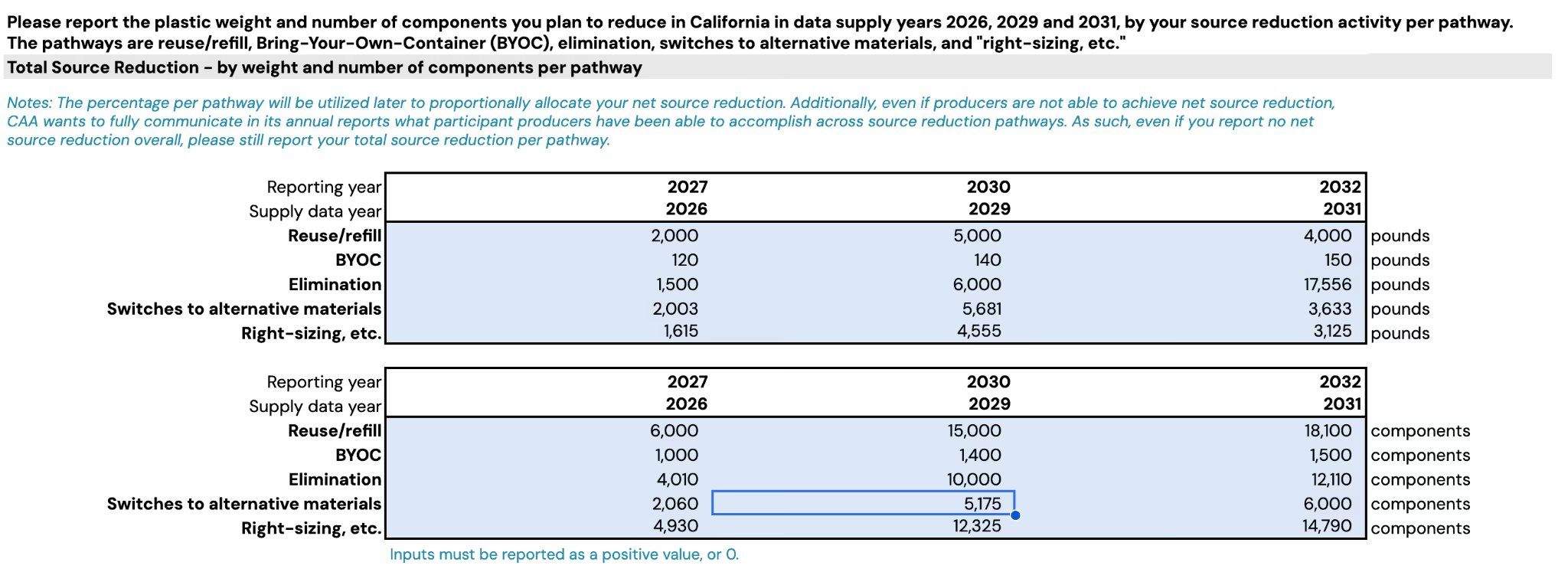
You could do it the hard, time-consuming way: dozens of spreadsheets, manual calculations, and a lot of second-guessing. Or you could use a purpose-built tool that models your impact instantly and brings the regulatory expertise to back it up. That brings us to the rePurpose Packaging Simulator.
How Should I Develop My ISR Plan?
With the rePurpose Packaging Simulator, you can replace months of manual analysis with real-time packaging scenario comparisons before you commit.
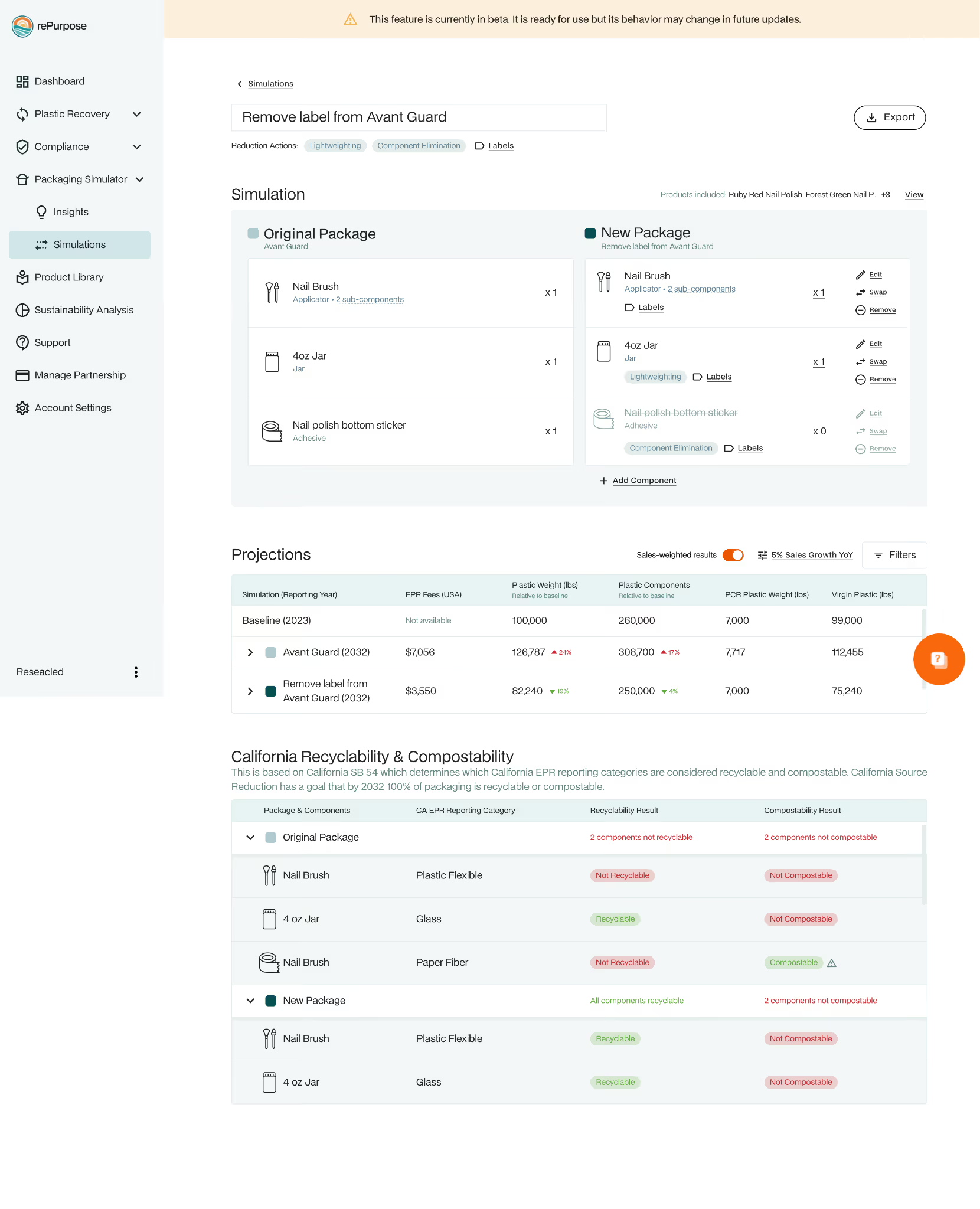
- Upload your packaging baseline data — or skip this step entirely if you're a Compliance customer, since we already have it. From there, the Simulator identifies "hot spot" SKUs most worth targeting for meaningful impact.
- Enter packaging changes you're considering, like component alternatives or material swaps — or start with the platform's own suggested changes. Every modification is mapped to an approved source reduction pathway.
- Run the simulation and instantly see projected impact across EPR fees, recyclability, plastic components, and more. Drill down further by filtering projections by reporting year.
- Compare scenarios and lock in your strategy. Review the projections with your team, make data-driven decisions you can stand behind, and use the output to build your ISR Plan.
- You won't be doing this alone. A dedicated rePurpose CSM works with you to finalize your ISR Plan so you can submit with confidence.
What Should Producers Do Right Now to Prepare?
Given how quickly these deadlines are approaching, and how little room for error exists, here's where to focus your energy:
Immediate Action Checklist
- Audit, finalize, and submit your 2023 baseline data. Once again, if you’re just getting started, don’t delay further. Deadlines may pass, but the obligation doesn’t.
- Submit the annual reports. The May 31, 2026 report requires 2025 supply and source reduction pathway data.
- Incorporate PCR where possible. It's the most accessible near-term pathway for meeting early milestones.
- Map your packaging changes to pathways. Categorize any changes made since 2023 (or planned) against the five approved pathways.
- Prepare for the ISR Plan. Prepare your historical reductions with data-backed evidence to claim credit on your ISR Plan.
- Simulate packaging changes for measurable source reduction goal-setting. Use a tool like the rePurpose Packaging Simulator to instantly model the impact of different packaging scenarios. See the effect on EPR fees, CA recyclability, and reduction.
- Align with your internal teams. Reducing plastic at the source requires internal alignment. Compliance, sustainability, finance, supply chain, packaging teams... Involve them with data-driven, actionable insights to develop the ISR plan.
- Develop your ISR Plan. Detailed guidance and a reporting workbook have been published by CalRecycle. When you use the rePurpose Packaging Simulator, you’ll have a dedicated CSM to help you review and finalize your ISR Plan before submitting.
Don't wait to register. Delayed registration doesn't eliminate obligations. Producers who wait will face full historical back-reporting and back-pay when they eventually comply.
Need help checking off this list? rePurpose can guide you every step of the way. Our platform, along with our experienced compliance experts, helps you stay ahead of regulatory updates and deadlines (including reporting your 2023 baseline report), centralize and validate your packaging data, and generate accurate, audit-ready reports.
And with the CAA Individual Source Reduction Plan due August 1, rePurpose can help you build the source reduction strategy needed to create your plan and stay compliant with confidence. To learn more about the Packaging Simulator, book a demo with our team.
The Bottom Line
California's plastic source reduction requirements are among the most demanding packaging regulations in the United States. The combination of binding plans, annual reporting, tight baseline requirements, and no adjustment for sales growth in terms of plastic reduction means that doing nothing is not a choice.
The producers who will navigate this most successfully are those who start their data preparation early, engage proactively with the ISR Plan process, and treat source reduction as an accelerator for packaging innovation.
Questions about your California EPR obligations? Reach out to our team for support with baseline data preparation, source reduction planning, and annual reporting.
This guide reflects information available as of May 2026. Monitor CAA and CalRecycle communications for updates.
Related posts


.avif)