
.jpg)
What is PCR?
PCR stands for Post-Consumer Recycled content. It refers to materials that have already been used by consumers, collected through recycling programs, and then processed into new materials for manufacturing.
For example, a plastic bottle collected through a municipal recycling program and later used to produce new packaging would be considered PCR content.
PCR laws require manufacturers to include a minimum percentage of this recycled material in certain products or packaging. These requirements are intended to increase demand for recycled materials and reduce reliance on virgin plastic. As of August 2025, five U.S. states have active PCR laws mandating minimum recycled-content thresholds for plastic and other products.
While PCR refers to a material requirement and EPR refers to a producer responsibility framework, the two are closely connected. Together, they are designed to support circular economy goals: reducing waste, increasing recycling, and shifting responsibility upstream to producers. To better understand how these requirements are evolving, read our blog post on what to expect from EPR in 2026. rePurpose helps brands navigate this intersection by bringing PCR and EPR compliance into a single, coordinated workflow. Connect with the rePurpose team to learn more.
Key Takeaways: What Brands Need to Act on Now
- PCR compliance is expanding.
As of 2026, five states have active PCR laws with more expected to follow. These requirements are layered on top of EPR obligations, increasing both regulatory exposure and operational complexity for brands selling across multiple states.
PCR thresholds increase over time, reporting is annual, and enforcement is tightening. Building repeatable systems for liability assessment, data management, and reporting is now essential. - Reporting deadlines come quickly, and data collection takes time.
Annual PCR reporting deadlines (as early as March 1 and April 1) require liability assessment, determining obligated roles, completing registrations, and collecting detailed data and validated supplier claims for accurate PCR reporting. - Penalties are real and can escalate quickly.
Most states impose per-pound penalties for PCR shortfalls and daily fines for failure to register or report. Public disclosure of compliance data (as in California and Washington) also creates reputational risk on top of financial liability. - Exemptions and waivers still require action.
Even if products qualify for exemptions or de minimis thresholds, many states still require registration, documentation, or formal confirmation. Assuming “we’re exempt” without validating requirements can still lead to noncompliance.
rePurpose helps brands manage this entire process, from determining obligations and collecting PCR data to preparing state-specific reports, so deadlines don’t become fire drills. The sooner you start, the easier compliance becomes.
Which states have passed PCR laws?
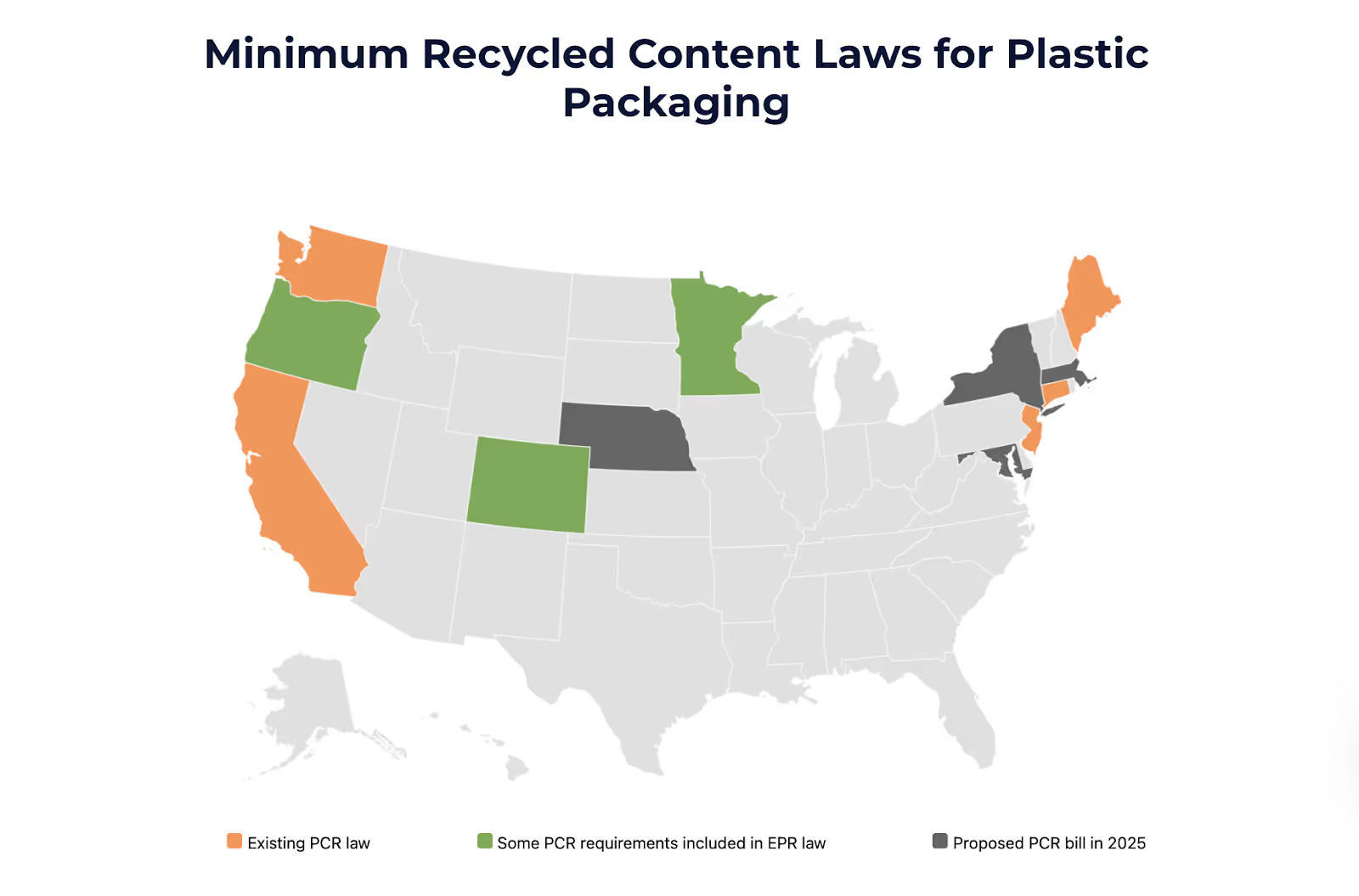
As of January 2026, the 5 states with existing PCR law are:
- California ( AB 793 , PRC §§ 42290–42297)
- Washington (70A.245 RCW)
- Connecticut ((HB 6664)Section 22a-246d)
- Maine (LD 1467)
- New Jersey (N.J.S.A. 13:1E-99.135)
.png)
The common exemptions across state laws include:
- Liners, caps, corks, closures, labels (Except in California)
- Exemptions/waivers for inadequate supply, conflict with federal requirements, or technical feasibility
California, Connecticut, Maine beverage bottle requirements:
- Applies only to plastic beverage containers subject to the state bottle deposit programs
- Medical, drug, dietary supplements, aerosols, infant formula, commercial cleaners
- Small manufacturers (<1 ton of containers or <$1M in revenue)
- <8 oz or larger than 5 gallons
- Milk products
- Medical food, food for special dietary use, infant formula
- Food packaging has a temporary exemption until 2027
This list of exempted products may not be comprehensive, and small manufacturers may be required to register (or report) in some states. Please check directly with the state regulatory bodies or your legal counsel if these laws affect your business.
What is California’s PCR Law (AB 793)?
California’s Plastic Minimum Content Standards & Reporting (from Assembly Bill 793) establishes minimum post-consumer recycled plastic (PCR) content requirements for plastic beverage containers subject to the California Redemption Value (CRV) system, and mandatory reporting to CalRecycle for sale in the state in the previous calendar year.
The law was implemented via permanent regulations effective Jan 1, 2024 and applies to beverage containers sold in the state that are eligible for CRV (e.g., bottled water, soft drinks)
1) Who Must Report for California PCR?
You must submit a report if either of the following applies:
- You fill plastic beverage containers for sale to distributors, dealers, or consumers in California.
- You import filled plastic beverage containers into California for sale.
NOTE: Beverage manufacturers are exempt from administrative penalties but not exempt from the reporting requirements if they sold 16,000,000 containers or fewer to a distributor, dealer, or consumer located in California during the calendar year for which the beverage manufacturer is reporting.
Exemptions
The law does not apply if you do not use plastic beverage containers or only sell refillable beverage containers.
Exempt rigid plastic containers or rigid plastic bottles that are medical devices, medical products that are required to be sterile, prescription medicine, and packaging used for those products from the labeling requirement described above.
2) What are the CA Minimum Recycled Content Standards?
California requires beverage manufacturers to ensure that plastic containers (subject to CRV) contain increasing amounts of post-consumer recycled plastic (PCR):

This “average” requirement means that overall PCR across all containers sold by a manufacturer must meet or exceed the applicable threshold for that reporting year.
3) How do you submit Annual PCR Reporting to CalRecycle?
Manufacturers of plastic beverage containers sold in California must report by March 1st each year with the following data for the prior calendar year:
- Reporting Format for beverage manufacturers
- Reports to be emailed to CalRecycle at MarketInformation@CalRecycle.ca.gov.
Note: If you are a plastic reclaimer or resin manufacturer of food/bottle-grade PCR, kindly refer to the hyperlinked webpages for more information. Additional reporting forms available here.
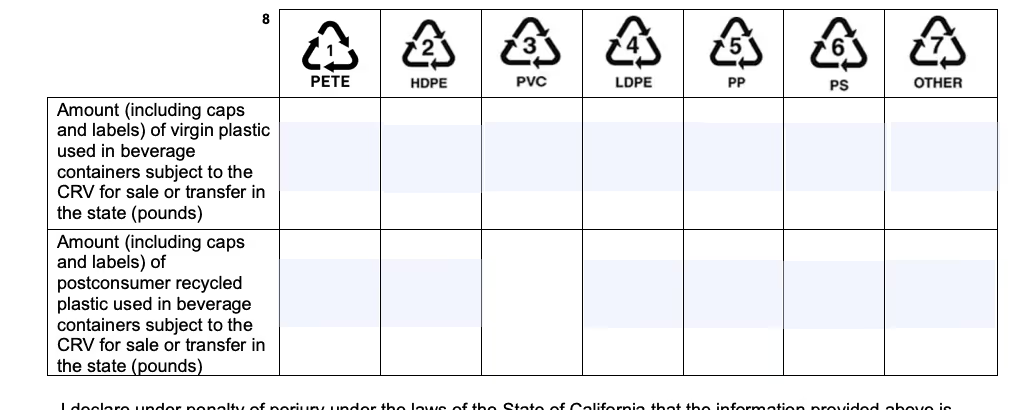
Report for beverage manufacturers Must Include:
- Amount (in pounds) of virgin plastic and post-consumer recycled plastic used (including caps and labels)
- Breakdown by resin type.
- Reports cover all CRV-eligible plastic beverage containers filled or imported into California for sale.
Reporting & Compliance Timeline
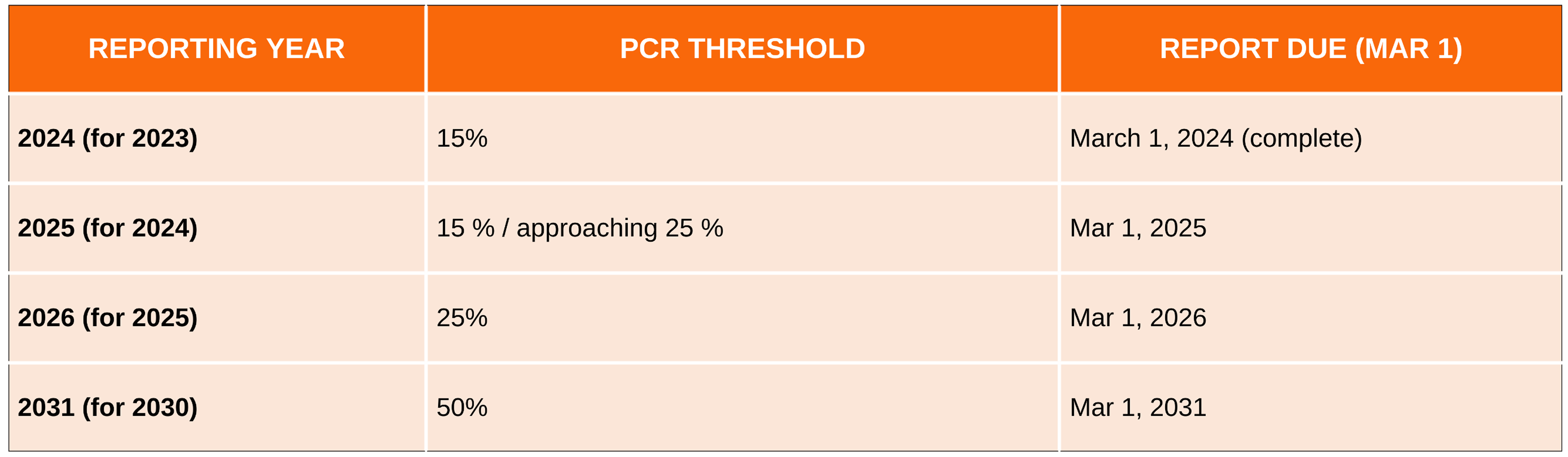
Note: The 2025 threshold increases to 25 %, legally binding on Jan 1, 2025, and PCR data for that year will be reported by March 1, 2026.
Reports are posted publicly on the CalRecycle website within 45 days after the due date.
4) What are the penalties for noncompliance?
If a manufacturer fails to meet the minimum PCR requirements, CalRecycle may assess an administrative penalty.
- Penalty rate: $0.20 per pound of shortfall (i.e., the difference between required PCR pounds and actual PCR pounds used).
- Penalties are calculated annually and may be paid in quarterly installments or via an extended payment plan with CalRecycle approval.
CalRecycle may grant a reduction in penalties if a manufacturer submits a corrective action plan demonstrating how it will meet future PCR requirements.
What is Washington’s PCR Law (70A.245 RCW)?
Washington’s recycled-content law (70A.245 RCW) sets minimum PCR content targets for specific plastic-packaged products (beverage bottles, household & personal care product containers, and plastic trash bags) sold in the state. Ecology (WA Dept. of Ecology) runs registration, annual reporting, audits and penalties.
1. Who is a Producer Under the Washington PCR law?
- The manufacturer who makes their own covered product brand or produces a product manufactured without a brand.
- The licensee of a covered product brand.
- If neither of the above, the importer or distributor of the covered product into Washington.
- Ecology may require a brand owner to identify the responsible producer if none has registered.
- If a product lacks identification of a brand, the producer is the person with decision-making authority over the content of the packaging, often the manufacturer.
- If none of the above apply, the person who distributes the product in or into the state is considered the producer, including through online sales.
2. What are the Covered Product Categories and Minimum Recycled Content Standards
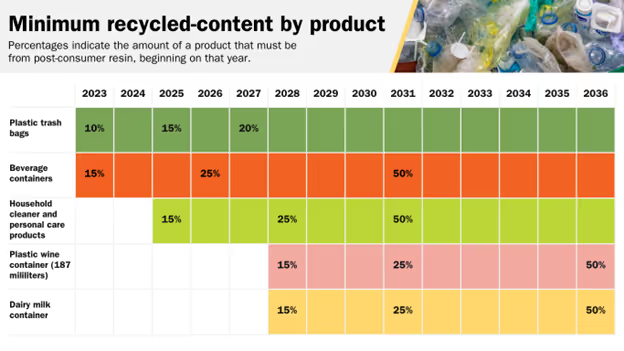
- Plastic beverage containers: (PET/HDPE, etc.): 15% (2023) → 25% (2026) → 50% (2031)
- Plastic household cleaner & personal care (HPC) containers: 15% (2025) → 25% (2028) → 50% (2031)
This applies to producers placing finished, filled household cleaning and personal care plastic containers on the WA market (brand owners/importers). The 15% is a floor for the full 2025 year (no grace period). The first HPC report (covering 2025 data) is due Apr 1, 2026. - Plastic trash bags: (LDPE, etc.): 10% (2023) → 15% (2025) → 20% (2027)
- Additional beverage sub-classes: (e.g., dairy milk jugs, 187 ml wine) have their own start years and ramps
Ecology may adjust % in future years based on market conditions; local preemption applies (cities can’t set different PCR % for these categories).
Exemptions [De Minimis Threshold per product category]:
- You’re considered an exempt producer if, in Washington in a calendar year, you either (a) place < 1 ton of plastic packaging material for that covered category or(b) generate < $1,000,000 in gross revenue from that product category
- You are a 501(c)3 registered organization
Note: De Minimis producers also need to register on the portal and confirm de-minimis status
3. What Must Be Reported?
- Prior-year total plastic weight by polymer, split virgin vs PCR
- Brand list;
- Sales Methodology: WA sales vs US sales population -based allocation method (with justification if the latter was utilized)
- (Optional upload) PCR resin certifications from suppliers
4. How and When Do You Submit Annual Reporting?
Annual registration & reporting cadence (all producers):
- Portal: SecureAccess Washington → Plastic producer registration & reporting
- Opens: Jan 1 each year
- Due: Apr 1 each year (registration + annual report)
- HPC reporting start: Apr 1, 2026 (for 2025 data)
- Action: Producers must register right away and begin collecting supplier PCR evidence for data 2025, to be reported in April 2026.
- Producer List and compliance info published by State here
5. What Are the Penalties for Noncompliance?
Producers who fail to register, label, or report by the April 1 deadline will receive two written notices of violation. Continued violation results in a civil penalty for each day in an amount not to exceed $1,000. The penalty revenue goes to the Recycling Enhancement Account to support local governments.
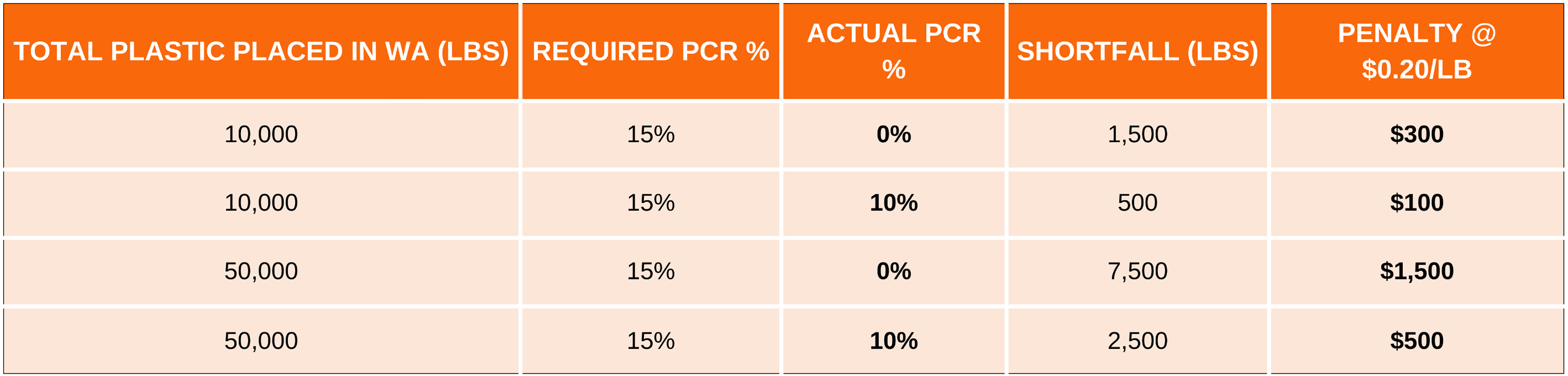
The second type of penalty applies to producers who fail to meet PCRC minimum requirements in their reporting. They calculate a fee based on a penalty calculation:
Penalty ($) = [ (Total lbs × Required %) − (Total lbs × Actual %) ] × $0.20
Quick liability table (Example PCR required = 15% in 2025)
What is Maine’s PCR Law (LD 1467)?
Maine’s Post-Consumer Recycled Plastic Content program is a state-level recycled content requirement specific to plastic beverage containers sold or distributed in Maine (includes the same plastic beverage containers covered under the Maine Bottle Bill). It mandates minimum percentages of post-consumer recycled (PCR) plastic in those containers and requires data reporting to the Maine Department of Environmental Protection (DEP).
This program originates from legislative action (LD 1467, later codified in Title 38) designed to increase recycled content in beverage packaging to support recycling markets and promote circularity.
1. Who Must Report for Maine’s PCR?
- Initiators of Deposit (IODs) — typically beverage brand owners or importers who are responsible under Maine’s Bottle Bill.
- Spirits manufacturers — for applicable beverage categories.
These entities must report data annually to the Maine DEP on the PCR content of plastic beverage containers sold in Maine during the prior calendar year.
IODs/spirits manufacturers may:
- Collect data directly from their packaging suppliers/manufacturers, or
- Contract with a third party to prepare and submit the required report on their behalf — but the responsible party remains liable for its accuracy.
This impacts:
- Beverage producers/brands selling into Maine
- Importers of filled plastic beverage containers
- Contract bottlers if they are designated as IODs under Maine law
2. What are the Covered Product Categories and Minimum PCR Requirements?
The PCR requirement applies to plastic beverage containers covered by the Maine Bottle Bill, including:
- Beer, cider, soda, and other carbonated beverages
- Non-carbonated water and similar beverages
- Alcoholic beverages (hard seltzers, coolers)
- Plastic containers from 50 milliliters up to 4 liters in size
It does not include:
- Milk, dairy products
- Apple cider or blueberry juice produced in Maine
- Broths or soups
- Instant drink powders
Frozen beverages, syrups, concentrates, extractsThis mirrors the exclusions in the existing Bottle Bill structure.

3. How and When Do You Submit Reporting?
Obligated reporting parties (Initiators of deposit and spirits manufacturers) are contacted directly via email with instructions and a Microsoft Forms link to submit their report. This becomes available around March 1st and is due back to DEP by April 1st each year.
4. What Must Be Reported?
On or before April 1, and annually thereafter, an initiator of deposit or spirits manufacturer that has in the prior calendar year sold, offered for sale or distributed for sale in the State a plastic beverage container shall register and submit a report to the department identifying:
- by resin type when applicable
- the amount by weight in pounds of post-consumer recycled plastic
- the amount by weight in pounds of plastic that is not post-consumer recycled plastic (virgin)
- and the percentage of post-consumer recycled plastic in the total weight of all plastic beverage containers the initiator or spirits manufacturer sold, offered for sale or distributed for sale in the State in that prior calendar year.
If the initiator of deposit or spirits manufacturer has determined the data required to be reported under this subsection using regional or territorial data, the initiator or spirits manufacturer shall describe in the report the methodology used to determine the Maine-specific figures.
Guidance for reporting is available here.
5. What Are the Penalties for Noncompliance?
While the statute sets the PCR targets, specific fee structures and penalty formulas were to be defined through rulemaking by Maine DEP and will apply in 2027. These details include:
- Non-compliance fees for failing to meet the minimum PCR requirement start from 2027.
- Annual registration fees tied to reporting and enforcement (begin in 2026).
- All fees collected go into the Maine Environmental Protection Fund to support state recycling and waste management programs.
What is Connecticut’s PCR Law (HB 6664)?
1. Who Must Report for Connecticut’s PCR?
Producers of certain plastic beverage containers as defined under Connecticut’s Bottle Bill are obligated to comply under HB 6664.
2. What Are the PCR Requirements?
Plastic Beverage Container PCR Requirements:
- 25% post-consumer recycled content by January 1, 2027
- 30% post-consumer recycled content by January 1, 2032
(Amendments to the original text reduced earlier proposed targets to these figures.)
Applicability:
- Applies to plastic beverage bottles as defined under Connecticut’s Bottle Bill (typically carbonated and non-carbonated beverage containers subject to deposit redemption rules).
3. How Do You Submit Reporting?
Registration
- On or before April 1, 2026, each producer that offered for sale, sold, or distributed plastic beverage containers in or into the state in the previous calendar year must register with the commissioner individually, or through a third-party representative that registers with the Commissioner of Energy and Environmental Protection on behalf of a group of producers, in a form and manner prescribed by the Commissioner.
- Note: each producer must pay a $500 fee, unless the producer sold, offered for sale or distributed less than ten thousand plastic beverage containers or, in the aggregate, less than two hundred pounds of plastic that is not post-consumer recycled plastic.
Reporting
- On or before April 1, 2026, and annually thereafter, each producer must submit a report to the Department of Energy and Environmental Protection on a form prescribed by the commissioner.
- Coming soon: A reporting form will be posted to this webpage in Feb 2026. Plastic Beverage Container Recycled Content Law
- Completed reporting forms must be submitted to DEEP.MMCAPlanning@ct.gov.
Waivers:
- Not more than once per year, a producer may seek a waiver from the requirements of this section by filing a written request on a form prescribed by the commissioner. In seeking any such waiver, the producer shall set forth the specific basis upon which the waiver is claimed, indicate any applicable timeframe for such waiver request, submit such proof as the commissioner determines to be necessary and provide any other information specified by the commissioner.
- Waivers for the 2027 recycled content requirement must be submitted between September 1, 2026, and October 1, 2026, and any approved waiver will take effect the first day of January of the following year.
- The law requires an independent third party to certify the post-consumer recycled content claims of applicable containers
What is New Jersey’s PCR Law (P.L. 2021)?
The NJ recycled content law, also codified at N.J.S.A. 13:1E-99.135-157. NJDEP has published FAQs & a Compliance Resource page for further detail.
1. Who Must Report for New Jersey’s PCR?
Manufacturers of covered containers and packaging products must report their PCR content. “Manufacturer” is broadly defined: includes entities who produce or generate regulated packaging (empty), brand owners of products packaged in regulated containers, importers/distributors if no one else qualifies, etc. Exempt vs. non‐exempt containers/products are specified.
2. What Are the Covered Products and Recycled Content Requirements?
“Regulated containers and packaging products” include:
- Rigid plastic containers
- Plastic beverage containers
- Glass containers
- Paper carryout bags
- Plastic carryout bags
- Plastic trash bags
Also, since Jan 18, 2024, the law bans polystyrene loose fill packaging (packing peanuts).
Exemptions:
- Food packaging temporarily exempt for 5 years: A package or container that contains food shall be temporarily exempt from the postconsumer recycled content requirements for a period of five years beginning on the effective date of the law (2024), except that the exemption shall not apply to a plastic beverage container or a glass container filled with a beverage.
Containers that are sold empty but are intended solely for the purpose of containing food, and are marketed as such, are eligible for this 5-year exemption. However, the food exemption does not apply to containers that are sold empty and may be used to contain food or other items. - Other permanent exemptions:
- Milk & Plant-based milk products
- Medical food: Defined in the Federal Food, Drug, and Cosmetic Act, 21 U.S.C. s.301 et seq.
- Food for special dietary use: Defined in 21 U.S.C. s.350 – Vitamins and Minerals
- Infant formula: Defined in the Federal Food, Drug, and Cosmetic Act, 21 U.S.C. s.301 et seq.
- Trash bags used for hazardous or medical waste
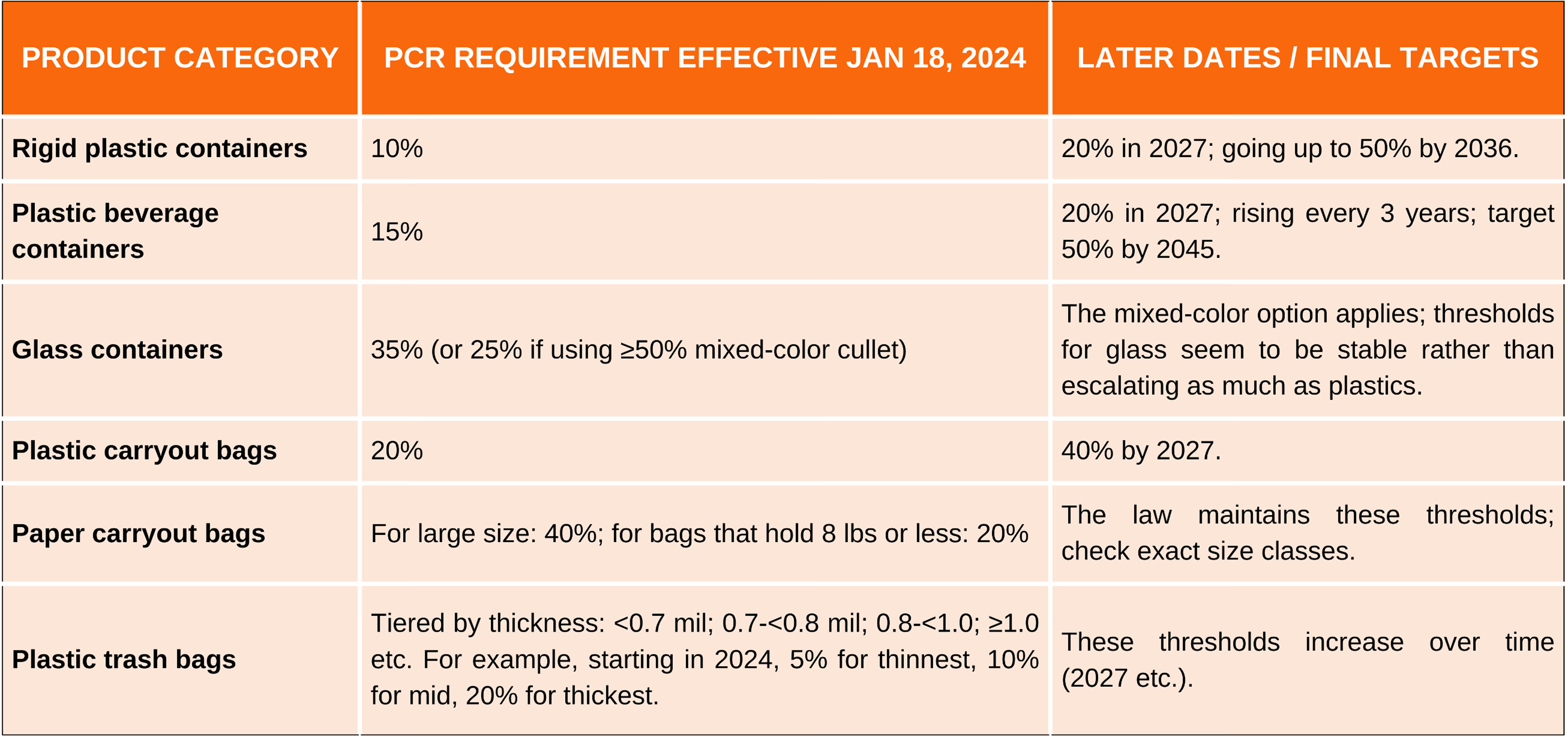
Recycled Content Requirements: Percentages & Phases
The law phases in PCR thresholds over several years (starting 2024), varying by product category. Some highlights:
3. How and When Do You Submit PCR Reporting?
Registration, Reporting & Fees
What brands/manufacturers need to do:
- Register annually with NJDEP (online business portal).
- Provide a list of all brands and products of regulated containers/packaging. If some are exempt, identify them.
- Pay registration fee: $1,000 per manufacturer. If gross revenue < $5 million, the fee is waived. But the compliance obligations still apply unless all their products are exempt.
- For exemptions, they must be claimed during registration, and the justification must be included in the compliance certification report.
- Waivers are available for non‐exempt regulated products if specific conditions are met (technological feasibility, supply limitations, conflicts with other laws, etc.). The waiver application has to be in writing, with supporting evidence. Has a fee (also $1,000) unless < $5M revenue.
Timelines & Deadlines
Here are the key dates:
- July 18, 2022: initial registration requirement began.
- Jan 18, 2024: first thresholds take effect; polystyrene loose fill ban starts.
- July 18, 2025: first compliance reports are due, even as part of registration/reporting period.
- Annual registration period: September 1 to December 31 every year.
To comply, brands/manufacturers should ensure they have this in place:
- Inventory all products that are regulated: which packaging/containers they use, per product line and per category (rigid plastic, glass, etc.).
- Determine recycled content: what is the percentage of post-consumer recycled content already in their materials, and whether this meets thresholds. If not, plan for sourcing more PCR content.
- Data collection and record keeping: track weights (or other units) by category of materials used (virgin vs recycled). Ensure, where required, data specific to New Jersey or justify use of national data prorated appropriately.
- Registration & reporting: complete the registration between Sept 1-Dec 31 in applicable year. Submit compliance certification (from July 18, 2025 onward) for previous year’s sales. Disclose any exemptions claimed and the rationale.
- Assess exemption/waiver eligibility: Identify which products are exempt under the law (e.g. milk products, certain food packaging temporarily, etc.), and if not exempt, whether obtaining a waiver is necessary and feasible. Prepare documentation.
- Supply chain engagement: If brand owners rely on suppliers (for bottles, containers, etc.), they need to ensure their upstream suppliers can meet PCR requirements, or get certifications/assurances.
- Labelling / marketing caution: If using “recycled content” claims, they need to ensure that the content is indeed post-consumer recycled material, and that claims match what is certified, since mis‐claims can lead to legal risk.
4) What Are the Penalties for Noncompliance?
Manufacturers who fail to register or submit false/misleading information can face penalties, such as civil administrative penalties. The law allows NJDEP to impose penalties per pound of virgin material used where recycled content is required. There are also fines for false statements.
What this means for brands
As PCR laws continue to roll out at the state level, the core compliance obligations are becoming clear. Brands will be expected to meet minimum PCR content requirements, submit annual PCR data reports, and closely monitor ongoing rule-making and regulatory guidance as programs evolve.
But compliance is not just a reporting exercise—it has real strategic implications. Brands should be auditing their supply chains now to understand where PCR content is (and isn’t) being used. Contracts with suppliers and co-packers should include clear requirements for PCR content tracking and data sharing, ensuring the information needed for compliance is available well before reporting deadlines. At the same time, stakeholders benefit from engaging early in rule-making and review processes, where implementation details that directly affect operations are often decided.
This is where rePurpose helps. Our platform is designed to support brands through the full PCR and EPR compliance lifecycle—from tracking recycled content and managing supplier data, to monitoring regulatory changes and preparing required reports. As PCR laws expand and expectations increase, having the right systems in place now can reduce risk, save time, and simplify compliance later.
Ready to get ahead of PCR requirements?
Learn how rePurpose can help you navigate PCR laws with clarity and confidence. Schedule a call with our team today.
Related posts

.avif)