
rePurpose Global acquired Bluebird Climate to build the industry’s first unified sustainability data platform—integrating carbon, packaging, plastics, compliance, and recovery. Built on real-world data from hundreds of brands.
When we announced our acquisition of Bluebird Climate, many people assumed it was a simple expansion of features: carbon + packaging + plastic data, now together under one roof.
But to us, this move has always represented something deeper. It brings to life our view of where the entire sustainability ecosystem needs to go in this new era of climate action.
The circular economy will never scale if we keep treating its components as separate, disconnected problems. Among other things,
- We need integration between upstream reduction & redesign work and downstream waste management infrastructure.
- We need harmonization of data between regulatory and voluntary requirements.
- We need interoperability of data across various ESG use cases, from mitigating carbon emissions to reducing packaging waste.
This acquisition is our bet on the future: sustainable action that works because it’s built on unified, verified, transparent data.
The Sustainability Sector Has Outgrown Its Patchwork Tools
H2: What Problem Were We Trying to Solve With This Acquisition?
For years, companies have tried to navigate sustainability using siloed, mismatched systems: a consultant for regulatory compliance, a packaging database for inventory management, a plastic footprint spreadsheet lurking in the background for setting plastic reduction baselines. Each one with its own definitions, methodologies, and assumptions.
This fragmentation didn’t happen accidentally, it mirrors how regulation has grown. Packaging EPR laws vary by state. Plastics treaties evolve slowly. ESG disclosure rules differ across continents. And within companies, climate, packaging, compliance, and CSR teams often operate on different data foundations.
The result? A sector full of effort, innovation, and intention - yet surprisingly little clarity.
This fragmentation creates:
- Reporting inconsistencies
- Compliance blind spots
- Misalignment between design, sustainability, and supply chain teams
- A lack of transparency across upstream and downstream decisions
- Opportunities for unintentional greenwashing
- Unnecessary budget spends because of missed opportunities to synchronize efforts and line-items
Companies are being asked to do more than ever, but with systems that were never designed to talk to each other. That creates confusion for brands, headaches for reporting teams, and frankly, opportunities for greenwashing that most companies do not want to engage in.
We realized that if we wanted to help companies align profit with purpose, we had to help them align their data first.
Why Bluebird Climate? Pulling the puzzle pieces together.
rePurpose had the depth of expertise: plastic footprinting, packaging intelligence, waste-system data - but we did not have a client facing software platform to deliver it quickly, consistently, and at scale. Bluebird gave us the technical foundation to turn our knowledge into an accessible, automated, and scale-ready system.
Before the acquisition, rePurpose had already spent half a decade building one of the strongest data foundations in the sustainability sector:
- We had measured plastic footprints for 500+ companies.
- We had built methodologies trusted by procurement, sustainability, and ESG teams across industries.
- We had mapped packaging formats and materials across thousands of SKUs.
- We had verified real waste-management outcomes across 40+ regions.
- We had developed an unusually detailed understanding of how packaging flows through the entire supply chain, including real data from downstream waste management systems.
In short: We knew how to measure, how to guide, and how to help companies think about their role in solving the plastic crisis. Software helped us bring it to life at a bigger, more efficient scale.
Separate call out: The rePurpose software platform creates a universal data layer for packaging sustainability across the U.S., streamlining compliance with 90+ regulations — including EPR — connecting consumer companies, retailers, packaging manufacturers, and regulators. Get started here.
The Circular Economy Doesn’t Work in Silos
One of the biggest misconceptions about the circular economy is that upstream and downstream interventions can be optimized independently.
What a company does with its packaging design directly affects what happens in waste management systems. EPR fees depend on recyclability. Recycled content rules link back to supply chain access. Carbon footprints and plastic footprints overlap in ways that most brands don’t yet see.
When companies measure these pieces separately, they miss the systems-level insights that unlock real progress. But when the data sits in one place—packaging design → footprint → compliance → recovery → suddenly everything becomes visible:
- Which packaging change reduces both EPR fees and plastic waste
- Which specific SKUs are vulnerable to greater compliance risks, and why
- Which materials are creating downstream recovery challenges for local municipalities
- How plastic mitigation fits into a brand’s ESG and net zero planning
- Where true sustainability impact is genuinely achievable, versus a marketing narrative that will never scale beyond a pilot initiative
The circular economy is not a set of disconnected actions. It is a single data story. Building the rePurpose Packaging Sustainability and Compliance platform allows us to bring these pieces together.
What Companies Can Expect Next
With Bluebird Climate now part of the rePurpose family, we are building:
- A unified packaging sustainability platform
Packaging measurement, voluntary and regulatory reporting, eco-modulation optimized reduction and redesign, and beyond value chain action to recover waste from the environment - all integrated into one platform. - Clear metrics that can be used for regulatory and voluntary requirements
Harmonized methodologies that go beyond any single regulatory or voluntary requirement to provide outputs that can be interoperable. - Intelligent Packaging Redesign Modeling
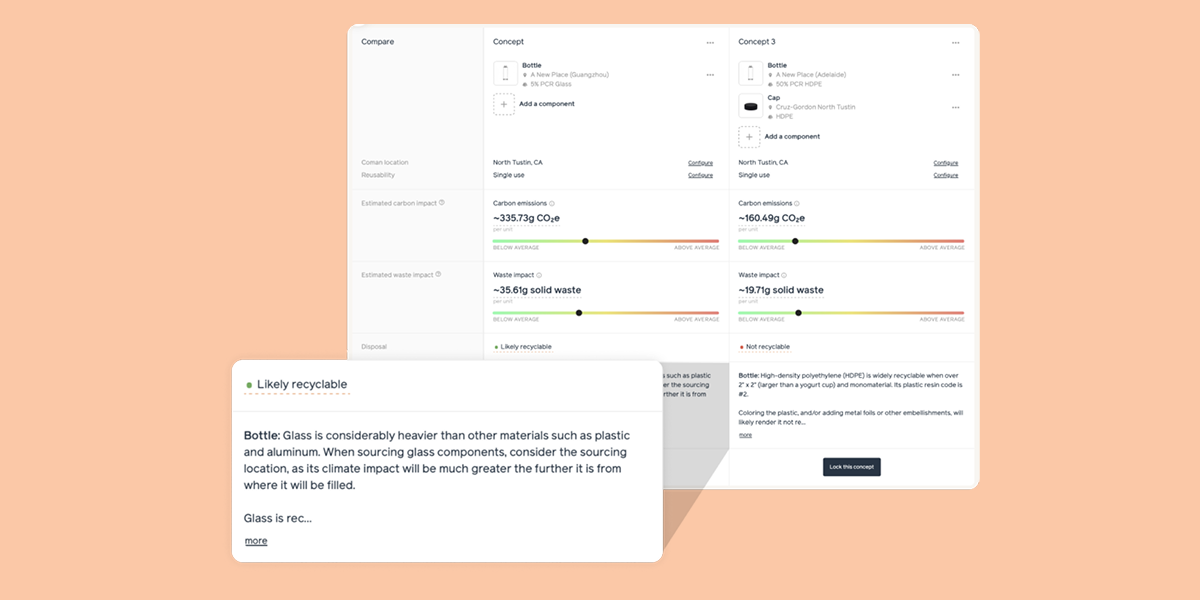
Simulate packaging redesign in real time to understand how they change your EPR (Extended Producer Responsibility) fee obligations, recyclability rates, and end-of-life outcomes. Brands can compare scenarios side-by-side to reduce virgin plastic, increase PCR, and cut landfill rates while staying ahead of regulatory requirements. - End-to-end visibility across your packaging sustainability efforts
From packaging spec sheets to downstream waste outcomes - all your packaging sustainability actions tightened into a continuous feedback loop.
Final Thought: Integrated Data Will Define the Next Era of ESG
Integration is the only way to make sustainability actionable. A unified system collapses silos and connects decisions across the full packaging lifecycle.
The rePurpose Packaging Sustainability and Compliance platform helps consumer companies design, comply, reduce, recover, and report - harmonized across a single source of truth.
Related posts

.avif)