
ResourcesBlog
Speaking with The Economist: Why the Future of the Circular Economy Depends on Integration 

Speaking with The Economist: Why the Future of the Circular Economy Depends on Integration 

Written by 
Published on 
December 15, 2025

At rePurpose Global, our mission is simple: we believe a world free of plastic waste is achievable within our lifetimes by helping companies profitably participate in the transition to a circular economy. 

We do this through a suite of solutions - combining software that guides brands through packaging regulatory compliance and redesign, with global waste-management supply chains that ensure a just and ethical transition for the 2,000 waste workers we support across 40 regions.

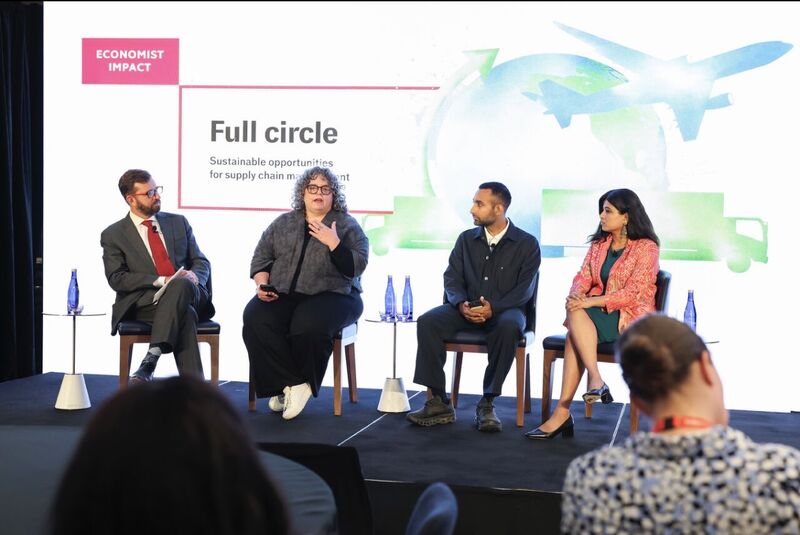
When I spoke at The Economist Full Circle during New York Climate Week, the conversation centered on what it will take to scale the circular economy. My answer? Stop looking for silver bullets. The greatest opportunity isn’t upstream or downstream — it’s in the integration of the two.
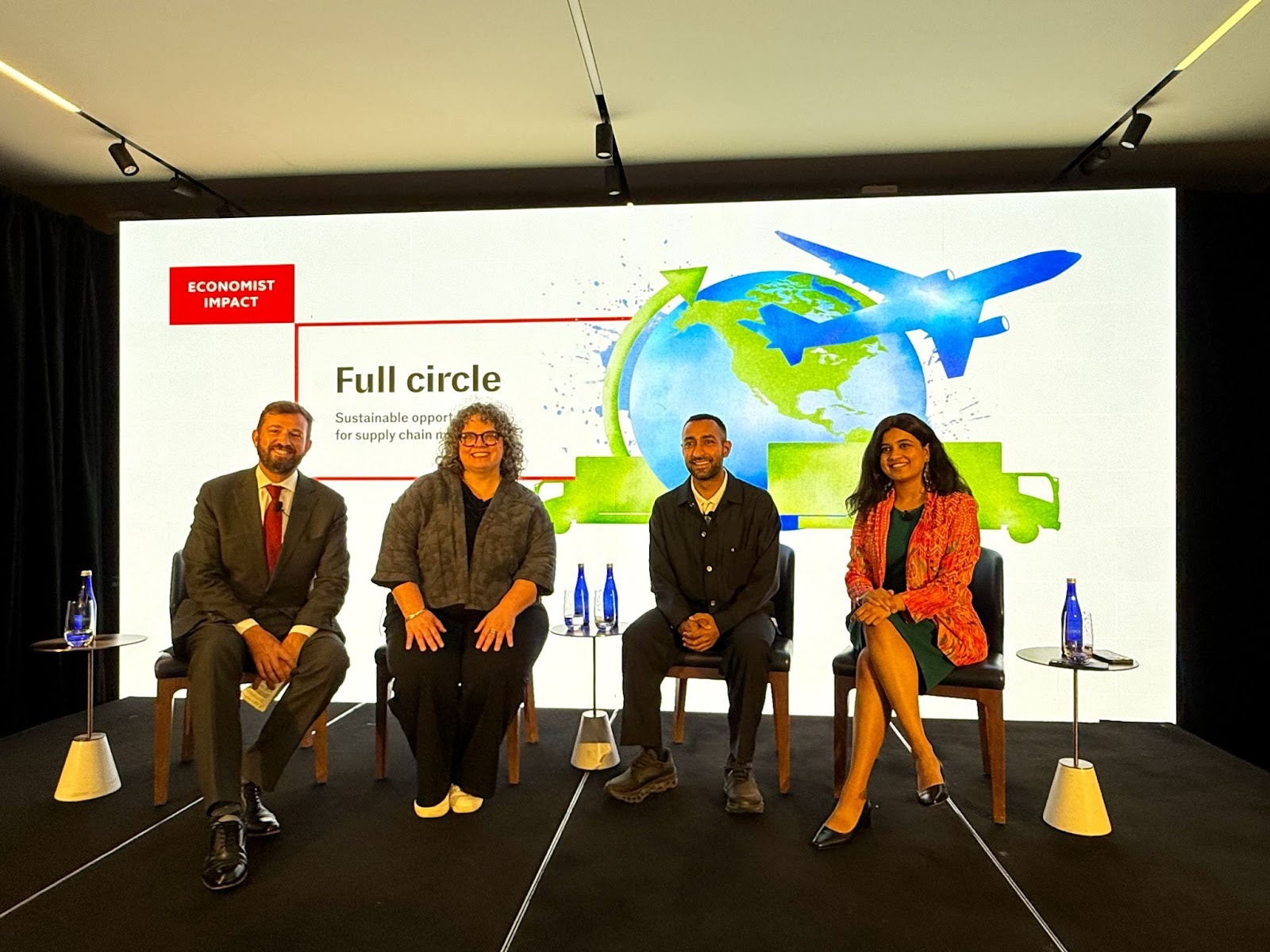
Svanika at The Economist Full Circle

Here are some of my key takeaways from the event:

1. Packaging design must connect with downstream waste management infrastructure

Every company today seems to be reinventing its own packaging “solution.” But post-consumption, we all share one singular waste management system. 

For example, if one brand chooses compostable materials and another doubles down on recyclables, local governments are left guessing: should they invest in composting or recycling infrastructure?

Circularity only works when packaging design aligns with the infrastructure that handles what we create after consumption. So we must have policies and private sector pathways to facilitate pre-competitive collaboration that ensures upstream solutions and downstream investments inform each other. 

rePurpose is a strong supporter of policies such as Extended Producer Responsibility (EPR) regulations that align corporate accountability with end-of-life management, ensuring that packaging EPR laws drive coordinated investment in recycling, reuse, and recovery

2. Data is the missing bridge for packaging circularity

We often repeat that less than 10 percent of plastic is recycled — but we rarely know why. There’s a knowledge asymmetry across the entire value chain. At rePurpose, anonymized data from hundreds of thousands of SKUs helps us see which materials, formats, and recovery methods succeed or fail in the real world.

Regulation cannot happen in a vacuum. Product design cannot happen in a vacuum. For circularity to scale, regulators, product designers, and waste recovery systems must share transparent data.

3. Four things the circular economy still needs to scale

  1. Mature technologies that work beyond the lab. For every “bacteria that eats plastic,” there are dozens of ideas that never move from pilot to market.

  2. Financing at scale: Addressing mismanaged plastic alone (under the broader umbrella of solving the plastic pollution crisis) will require an estimated $5.2 trillion over the next 20 years — capital that must blend public, private, and outcomes-based finance.

  3. Harmonized regulation: Businesses can’t design one package for reuse in one country or state and another packaging type for recyclability in a different region. We need policies that enforce interoperability across borders so upstream investments can be streamlined.

  4. Incentives for recycled and reusable content: Policies such as minimum post-consumer-recycled (PCR) content requirements, like those in California and the EU, can shift demand and stabilize costs for recycled materials.

4. Profitability and resilience are two sides of the same coin

When companies take a long-term view, investing in circularity becomes not just ethical but inevitable. Virgin-material costs will rise, and having stable access to recycled feedstock reduces volatility and risk.

For instance, one multinational company rePurpose works with in India is funding village-level waste-collection systems. At first, it’s a cost center. Over time, it guarantees fixed-price supply of recycled material and an ethical, traceable supply chain that provides feedstock for this company’s packaging manufacturers; thus converting short-term expenses into long-term savings.

The path forward

Building a circular economy isn’t about choosing between design, technology, or waste management. It’s about connecting them — aligning incentives, data, and financing so that circularity becomes the default, not the exception.

And that’s what rePurpose Global is working toward every day: a system where business value and environmental resilience are not competing goals but the same outcome, seen over a longer horizon.

I’m grateful to The Economist Impact team for curating a space that didn’t chase easy answers, but leaned into nuance. And grateful to Phil Cornell, senior advisor, energy and sustainability, Economist Impact for moderating and my brilliant co-panelists Anant Ahuja, director ESG and sustainability, Shahi Exports and Samantha Veide, managing director, Americas, Forum for the Future for their excellent insights. 

Frequently Asked Questions

What is the circular economy in packaging?
It’s a new integrated supply chain where the lifespan of materials are extended through reduction, reuse, and recycling systems - minimizing waste and emissions.

How does EPR compliance support circularity?
EPR (Extended Producer Responsibility) laws make producers financially and operationally responsible for their packaging after sale, encouraging recyclable design and supporting waste management infrastructure.

What role does AI play in recycling and ESG reporting?
AI improves recycling efficiency by identifying material types, optimizing collection, and automating sustainability data reporting. At rePurpose, we also use AI tools to help companies gather better data and insights on their packaging portfolio, helping find easy reduction pathways. 

Why do consumers want sustainable products?
More than 70% of global consumers now prefer sustainable options and are willing to pay more for brands with verified environmental impact.

How can companies make circularity profitable?
By integrating design, data, and recovery systems under one strategy; thus enabling cost savings, supply stability, and regulatory compliance simultaneously.

Ready to transform your packaging strategy?

Join 500+ CPG brands who've streamlined their packaging compliance and claims with rePurpose Global.

ResourcesBlog
Speaking with The Economist: Why the Future of the Circular Economy Depends on Integration 

Speaking with The Economist: Why the Future of the Circular Economy Depends on Integration 

Written by 
Published on 
December 15, 2025
Speaking with The Economist: Why the Future of the Circular Economy Depends on Integration 

At rePurpose Global, our mission is simple: we believe a world free of plastic waste is achievable within our lifetimes by helping companies profitably participate in the transition to a circular economy. 

We do this through a suite of solutions - combining software that guides brands through packaging regulatory compliance and redesign, with global waste-management supply chains that ensure a just and ethical transition for the 2,000 waste workers we support across 40 regions.

When I spoke at The Economist Full Circle during New York Climate Week, the conversation centered on what it will take to scale the circular economy. My answer? Stop looking for silver bullets. The greatest opportunity isn’t upstream or downstream — it’s in the integration of the two.

Svanika at The Economist Full Circle

Here are some of my key takeaways from the event:

1. Packaging design must connect with downstream waste management infrastructure

Every company today seems to be reinventing its own packaging “solution.” But post-consumption, we all share one singular waste management system. 

For example, if one brand chooses compostable materials and another doubles down on recyclables, local governments are left guessing: should they invest in composting or recycling infrastructure?

Circularity only works when packaging design aligns with the infrastructure that handles what we create after consumption. So we must have policies and private sector pathways to facilitate pre-competitive collaboration that ensures upstream solutions and downstream investments inform each other. 

rePurpose is a strong supporter of policies such as Extended Producer Responsibility (EPR) regulations that align corporate accountability with end-of-life management, ensuring that packaging EPR laws drive coordinated investment in recycling, reuse, and recovery

2. Data is the missing bridge for packaging circularity

We often repeat that less than 10 percent of plastic is recycled — but we rarely know why. There’s a knowledge asymmetry across the entire value chain. At rePurpose, anonymized data from hundreds of thousands of SKUs helps us see which materials, formats, and recovery methods succeed or fail in the real world.

Regulation cannot happen in a vacuum. Product design cannot happen in a vacuum. For circularity to scale, regulators, product designers, and waste recovery systems must share transparent data.

3. Four things the circular economy still needs to scale

  1. Mature technologies that work beyond the lab. For every “bacteria that eats plastic,” there are dozens of ideas that never move from pilot to market.

  2. Financing at scale: Addressing mismanaged plastic alone (under the broader umbrella of solving the plastic pollution crisis) will require an estimated $5.2 trillion over the next 20 years — capital that must blend public, private, and outcomes-based finance.

  3. Harmonized regulation: Businesses can’t design one package for reuse in one country or state and another packaging type for recyclability in a different region. We need policies that enforce interoperability across borders so upstream investments can be streamlined.

  4. Incentives for recycled and reusable content: Policies such as minimum post-consumer-recycled (PCR) content requirements, like those in California and the EU, can shift demand and stabilize costs for recycled materials.

4. Profitability and resilience are two sides of the same coin

When companies take a long-term view, investing in circularity becomes not just ethical but inevitable. Virgin-material costs will rise, and having stable access to recycled feedstock reduces volatility and risk.

For instance, one multinational company rePurpose works with in India is funding village-level waste-collection systems. At first, it’s a cost center. Over time, it guarantees fixed-price supply of recycled material and an ethical, traceable supply chain that provides feedstock for this company’s packaging manufacturers; thus converting short-term expenses into long-term savings.

The path forward

Building a circular economy isn’t about choosing between design, technology, or waste management. It’s about connecting them — aligning incentives, data, and financing so that circularity becomes the default, not the exception.

And that’s what rePurpose Global is working toward every day: a system where business value and environmental resilience are not competing goals but the same outcome, seen over a longer horizon.

I’m grateful to The Economist Impact team for curating a space that didn’t chase easy answers, but leaned into nuance. And grateful to Phil Cornell, senior advisor, energy and sustainability, Economist Impact for moderating and my brilliant co-panelists Anant Ahuja, director ESG and sustainability, Shahi Exports and Samantha Veide, managing director, Americas, Forum for the Future for their excellent insights. 

Frequently Asked Questions

What is the circular economy in packaging?
It’s a new integrated supply chain where the lifespan of materials are extended through reduction, reuse, and recycling systems - minimizing waste and emissions.

How does EPR compliance support circularity?
EPR (Extended Producer Responsibility) laws make producers financially and operationally responsible for their packaging after sale, encouraging recyclable design and supporting waste management infrastructure.

What role does AI play in recycling and ESG reporting?
AI improves recycling efficiency by identifying material types, optimizing collection, and automating sustainability data reporting. At rePurpose, we also use AI tools to help companies gather better data and insights on their packaging portfolio, helping find easy reduction pathways. 

Why do consumers want sustainable products?
More than 70% of global consumers now prefer sustainable options and are willing to pay more for brands with verified environmental impact.

How can companies make circularity profitable?
By integrating design, data, and recovery systems under one strategy; thus enabling cost savings, supply stability, and regulatory compliance simultaneously.

Ready to transform your packaging strategy?

Join 500+ CPG brands who've streamlined their packaging compliance and claims with rePurpose Global.